Special · Fabric vs Databricks
Microsoft Fabric vs Databricks
A visual 2026 guide to where Microsoft Fabric and Databricks differ, where they overlap, and when using both makes sense.
13 slides · October 4, 2026
-
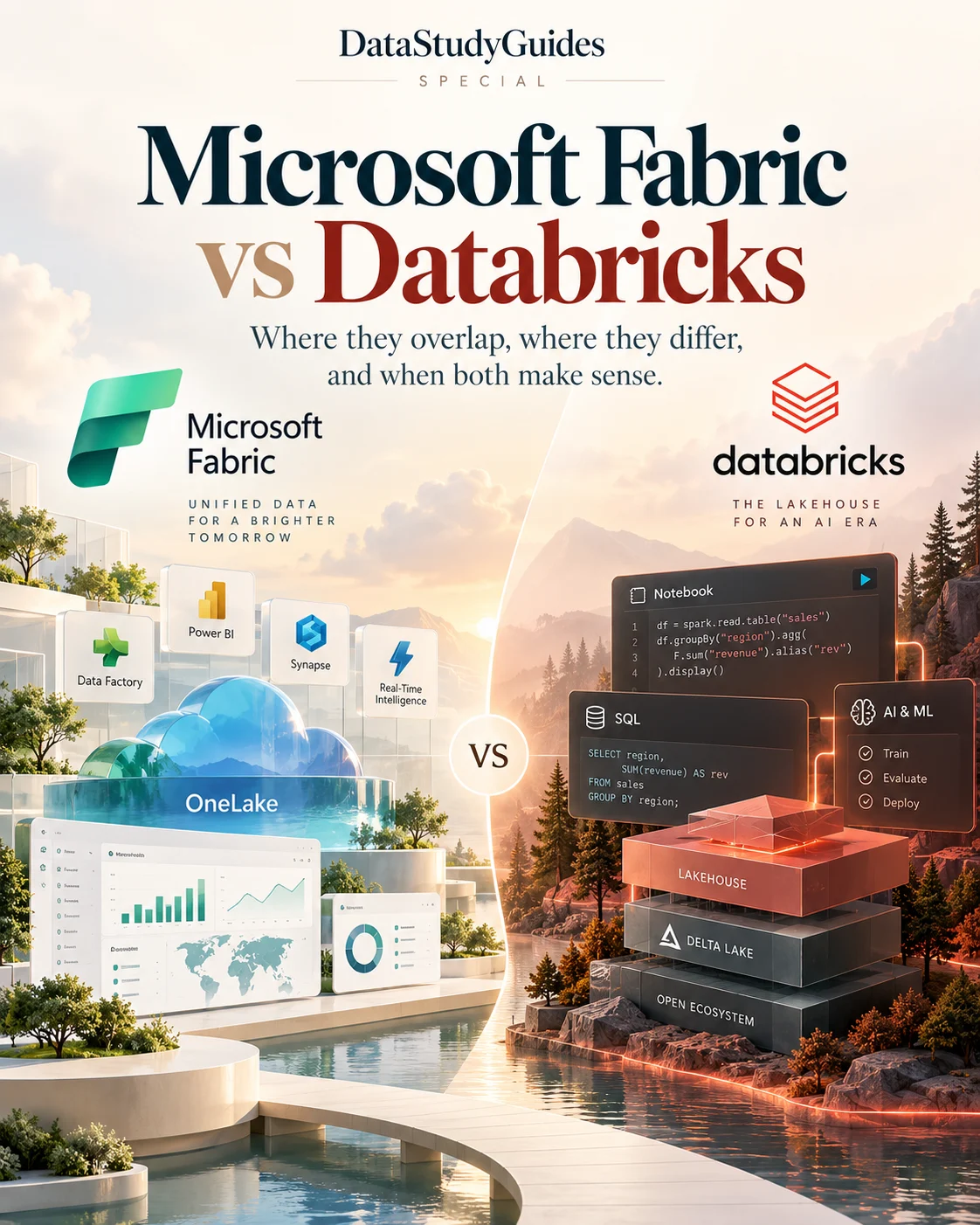
GPT Image editorial cover
01Microsoft Fabric vs Databricks
Two modern data platforms, with different centers of gravity.
-
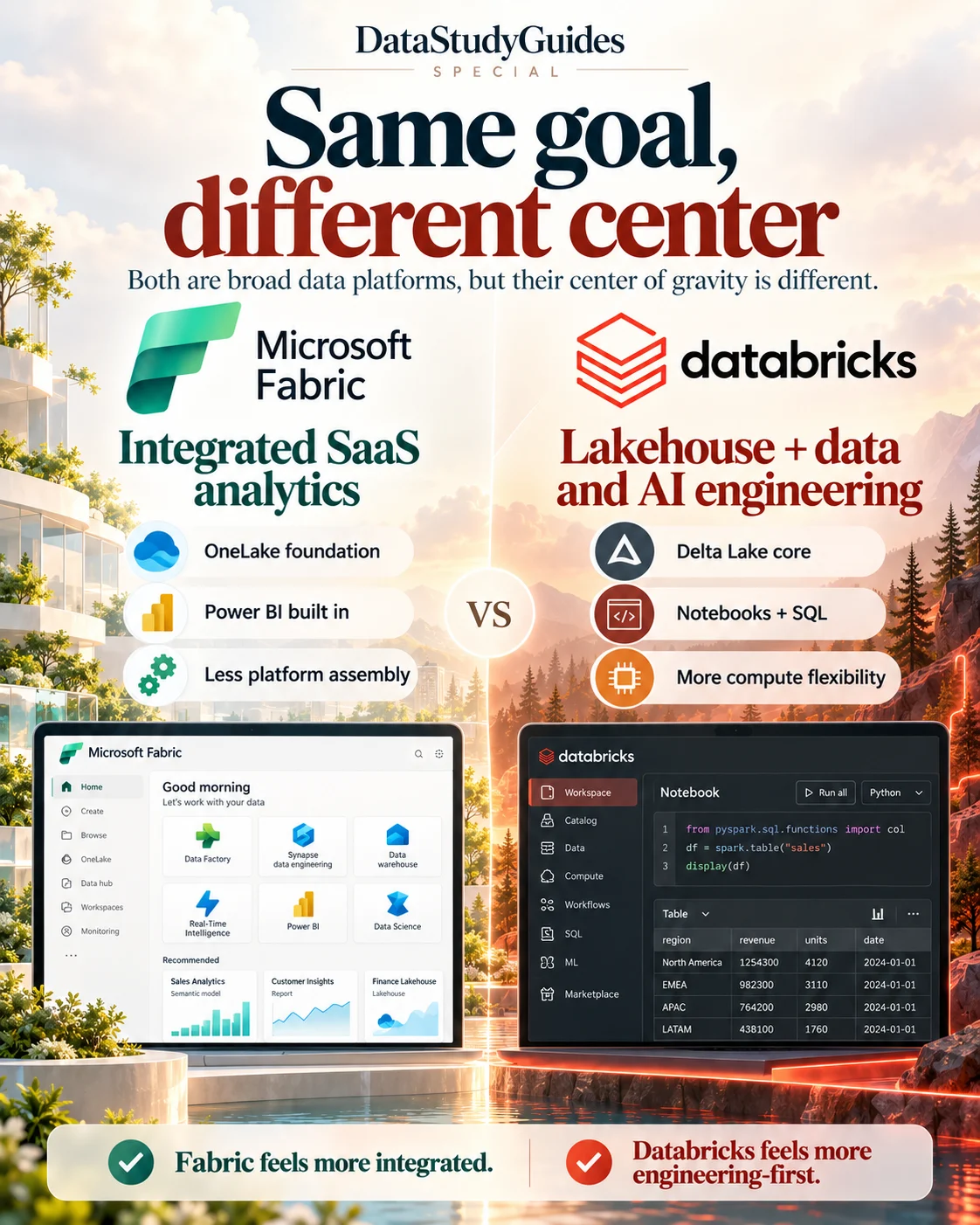
GPT Image editorial visual
02Same goal, different center
Fabric is integrated SaaS analytics. Databricks is a lakehouse-centered data and AI engineering platform.
Microsoft Fabric overview ↗ -
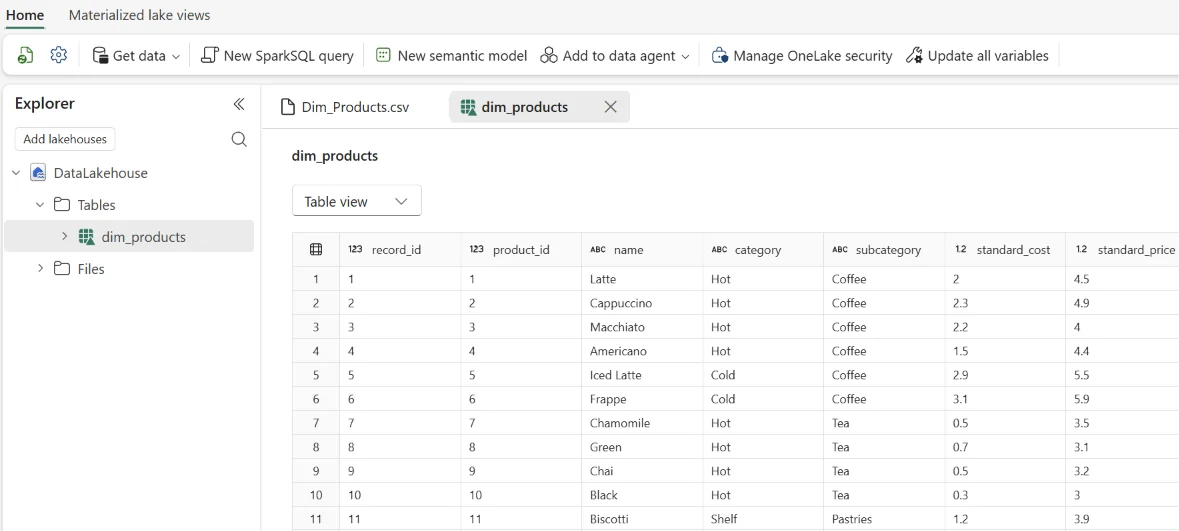
Microsoft Learn product screenshot
03OneLake in practice
OneLake is the shared data layer beneath Fabric experiences, so data can stay discoverable and reusable across analytics workloads.
Get data into OneLake ↗ -
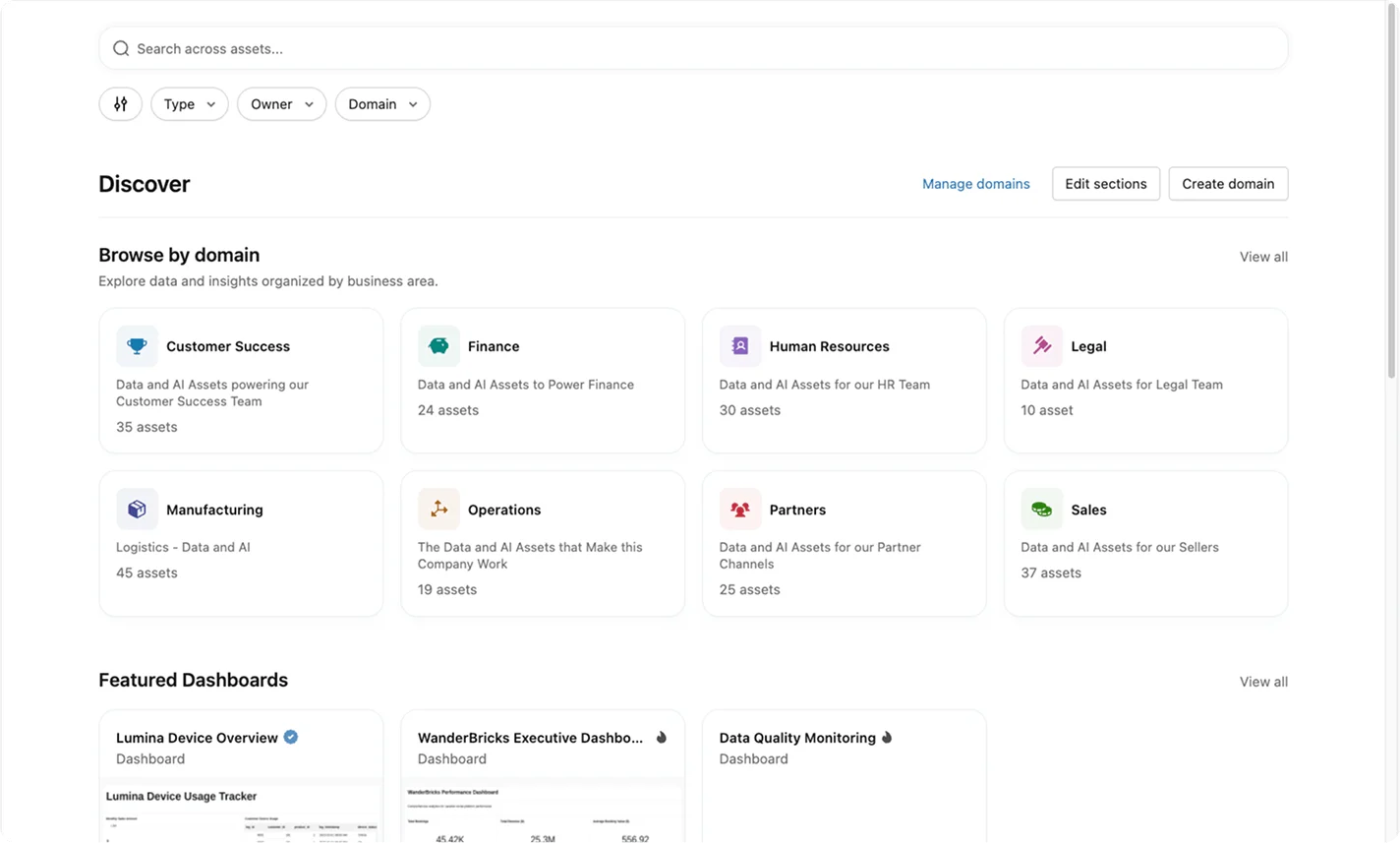
Databricks product screenshot
04Unity Catalog in practice
Databricks puts governed discovery close to the engineering workspace, with data and AI assets organized through Unity Catalog.
Unity Catalog ↗ -
GPT Image editorial visual
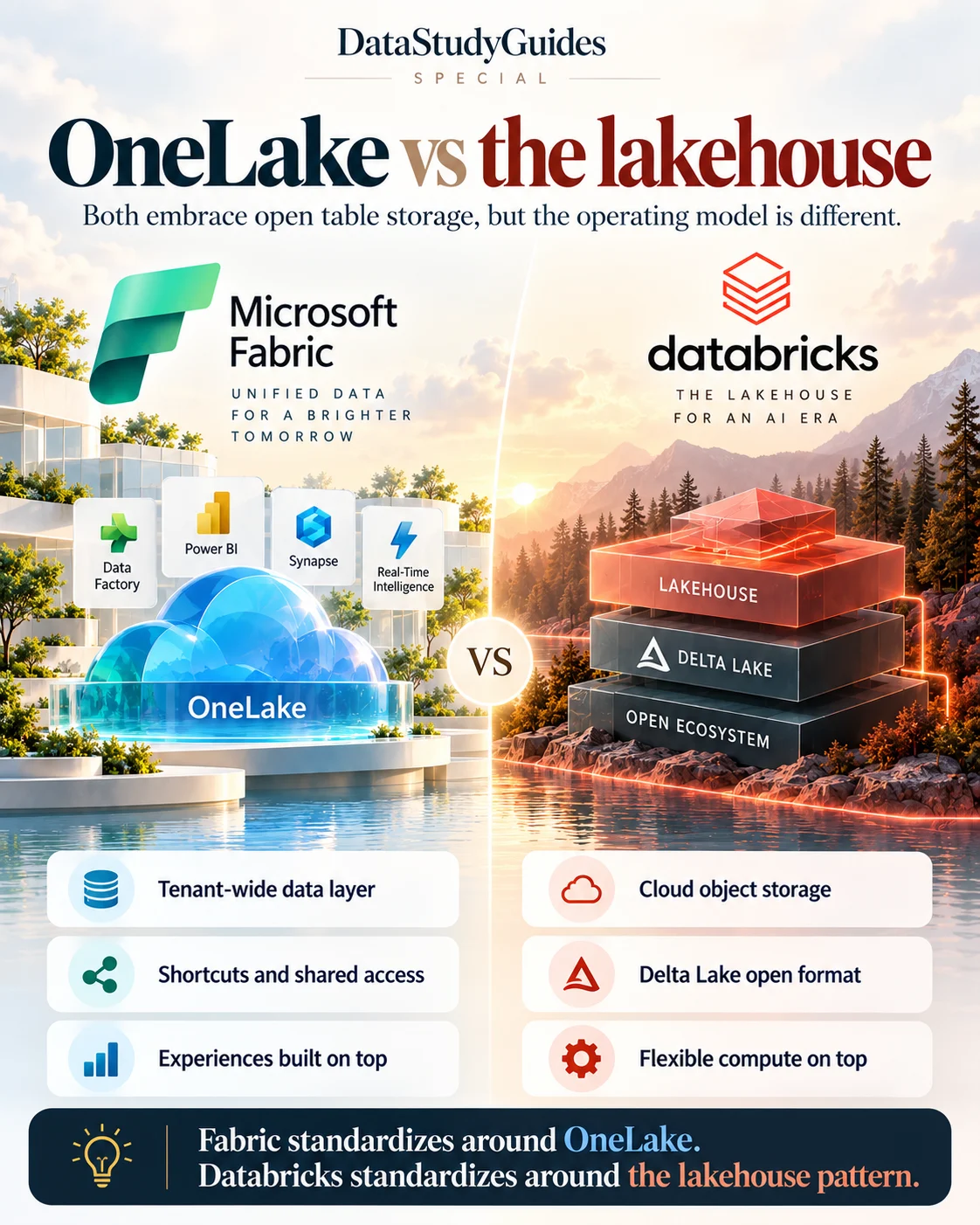
05OneLake vs the lakehouse
Both embrace open table storage, but the operating model around storage and compute is different.
What is OneLake? ↗ -
GPT Image visual informed by official product UI
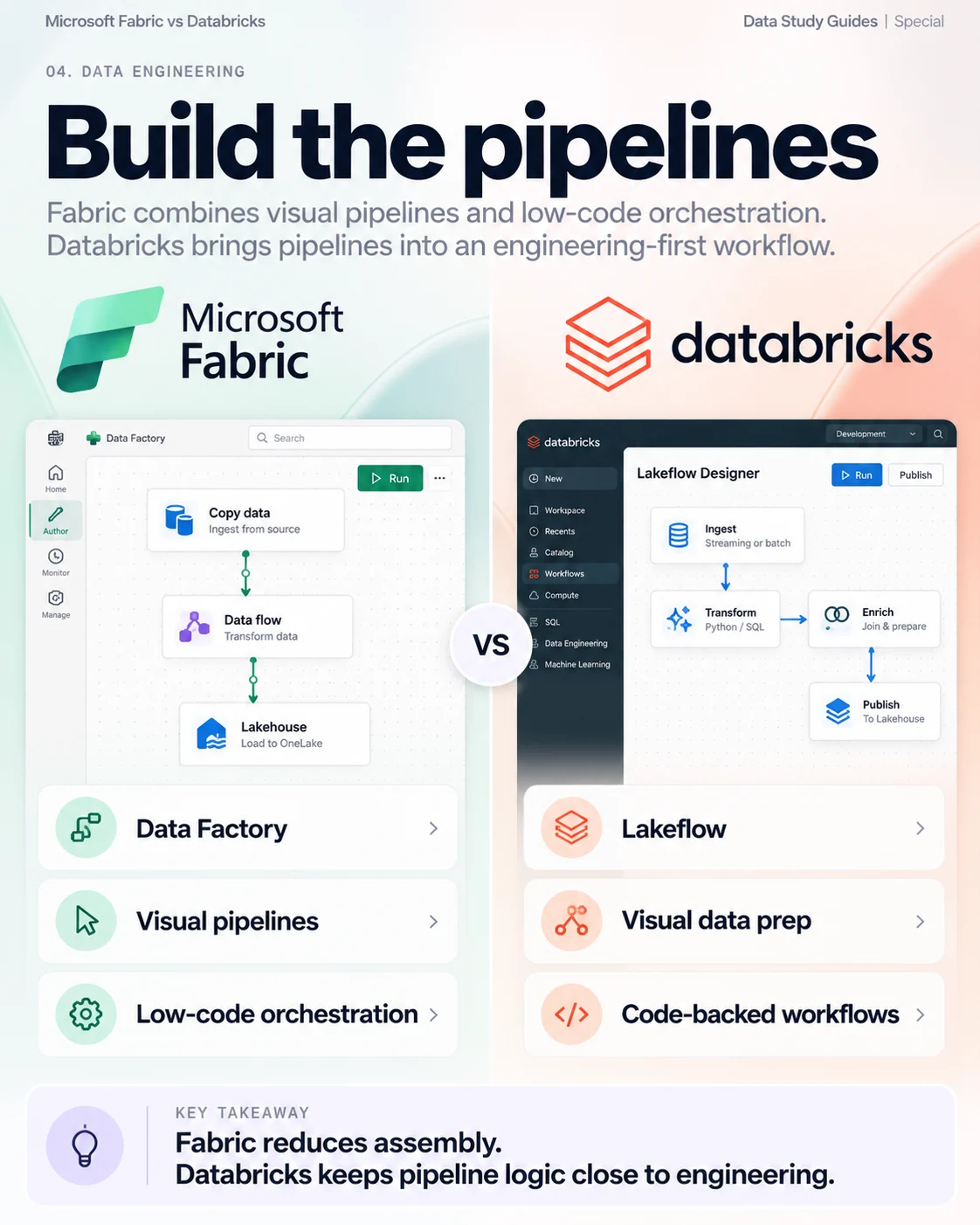
06Build the pipelines
Fabric combines visual pipelines and low-code orchestration. Databricks keeps pipeline logic close to engineering.
Pipeline canvas in Fabric Data Factory ↗ -
GPT Image editorial visual
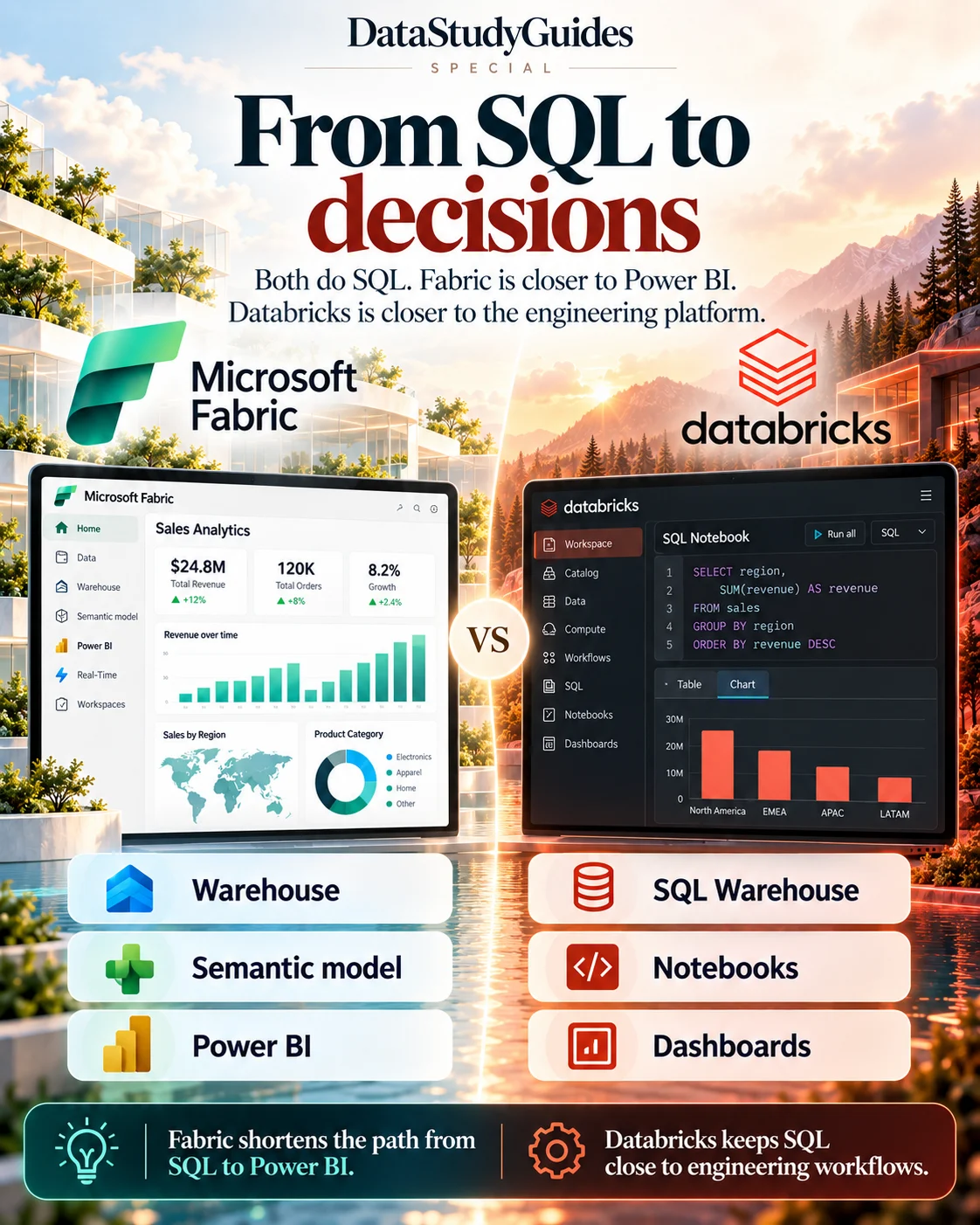
07From SQL to decisions
Both do SQL analytics, but Fabric has the shortest native path from warehouse and semantic model into Power BI.
Data warehousing in Microsoft Fabric ↗ -
GPT Image editorial visual
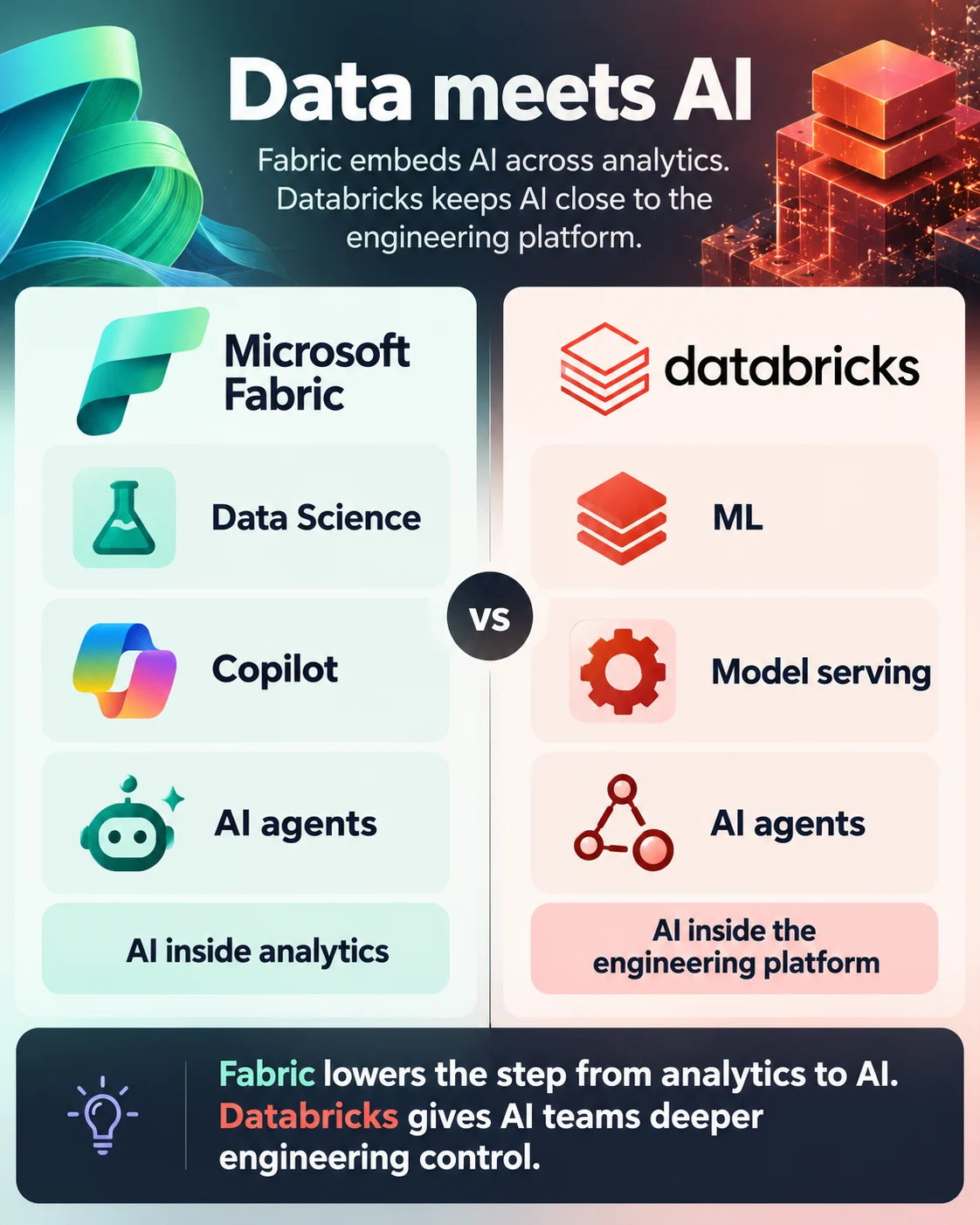
08Data meets AI
Fabric embeds AI across analytics. Databricks keeps ML, model serving, and AI engineering close to the data platform.
Machine learning in Azure Databricks ↗ -
GPT Image editorial visual
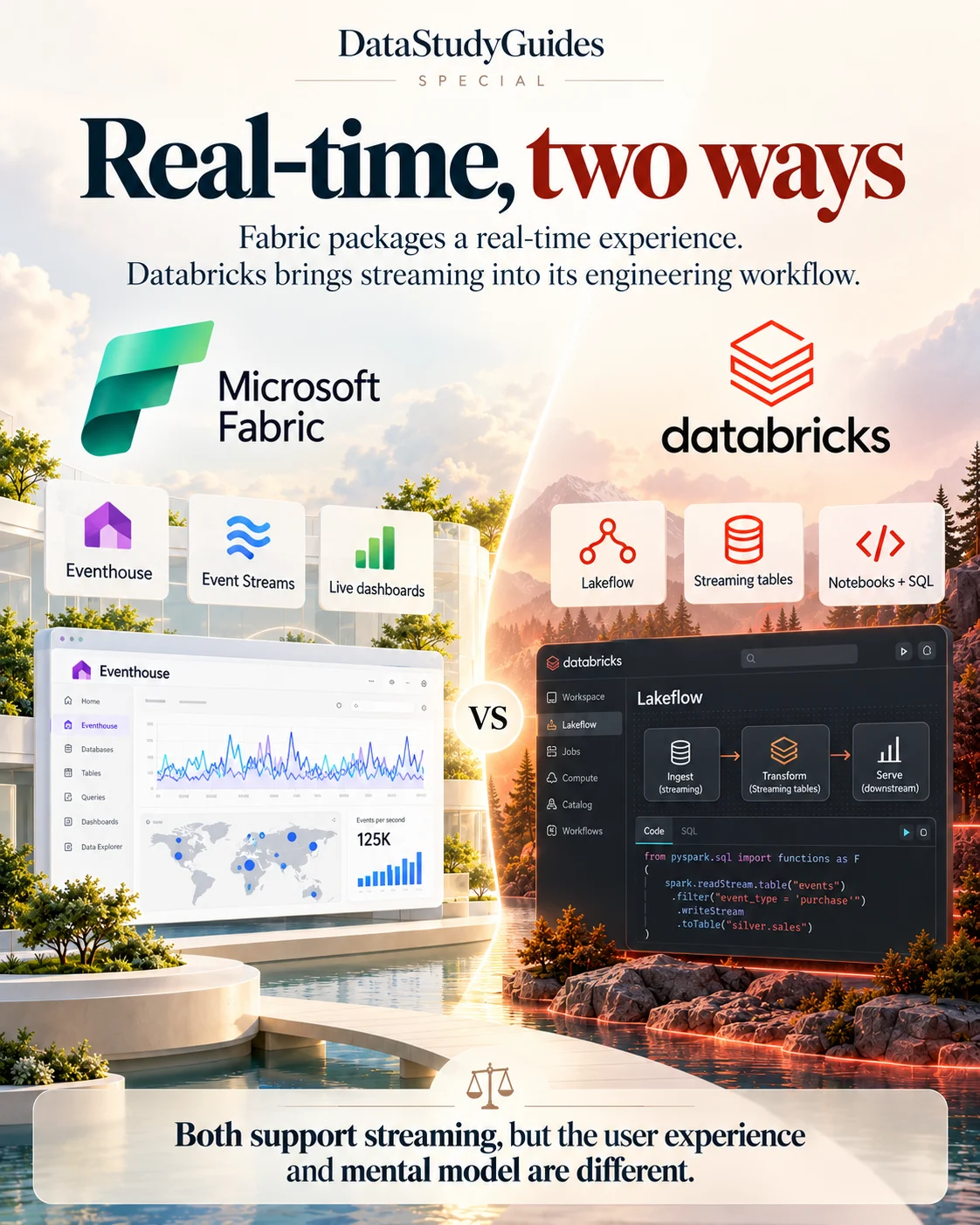
09Real-time, two ways
Fabric packages a real-time analytics experience. Databricks brings streaming into its engineering workflow.
Real-Time Intelligence overview ↗ -
GPT Image editorial visual
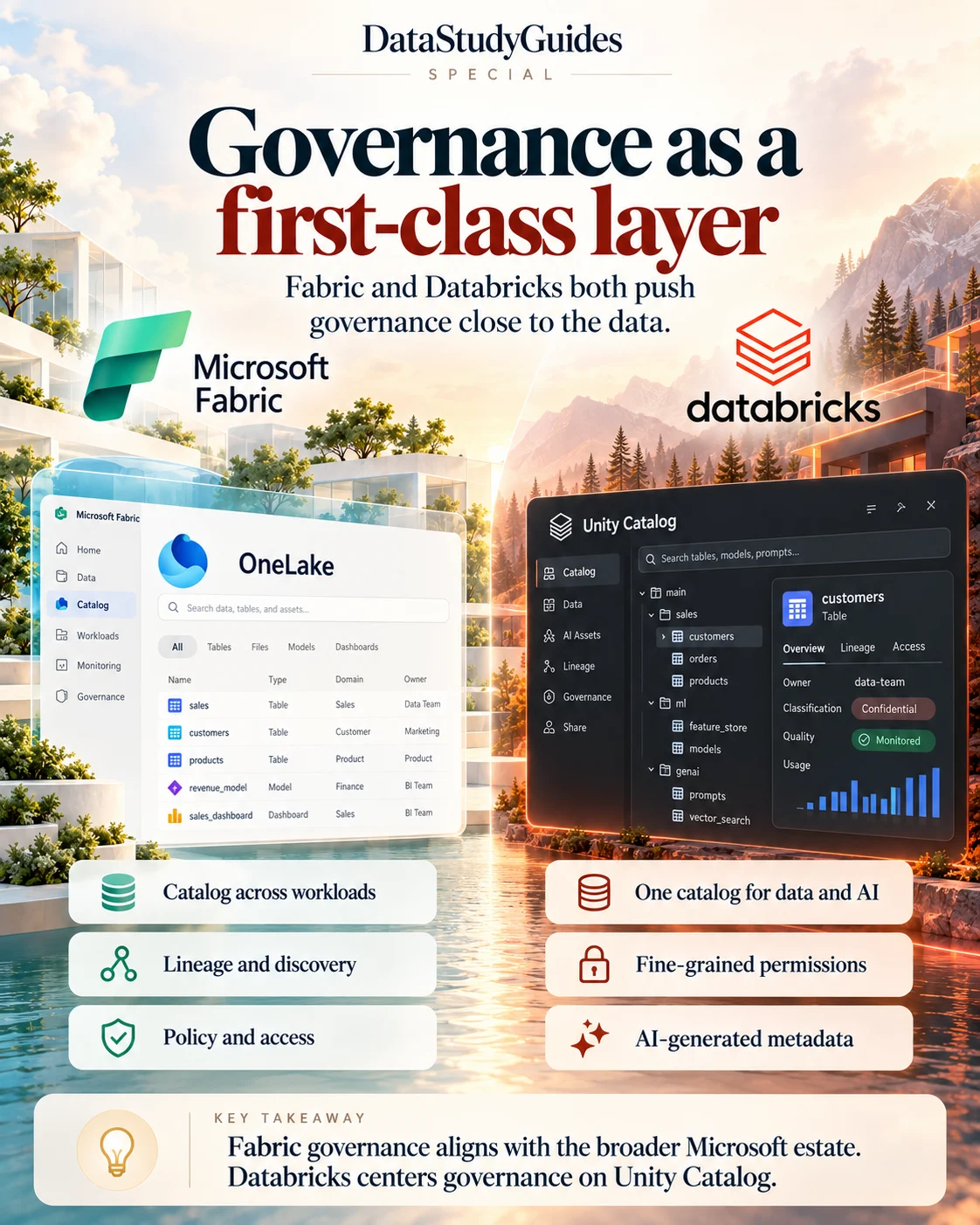
10Governance as a first-class layer
Fabric aligns governance with the Microsoft estate. Databricks centers governance on Unity Catalog across data and AI.
Unity Catalog ↗ -
GPT Image editorial visual
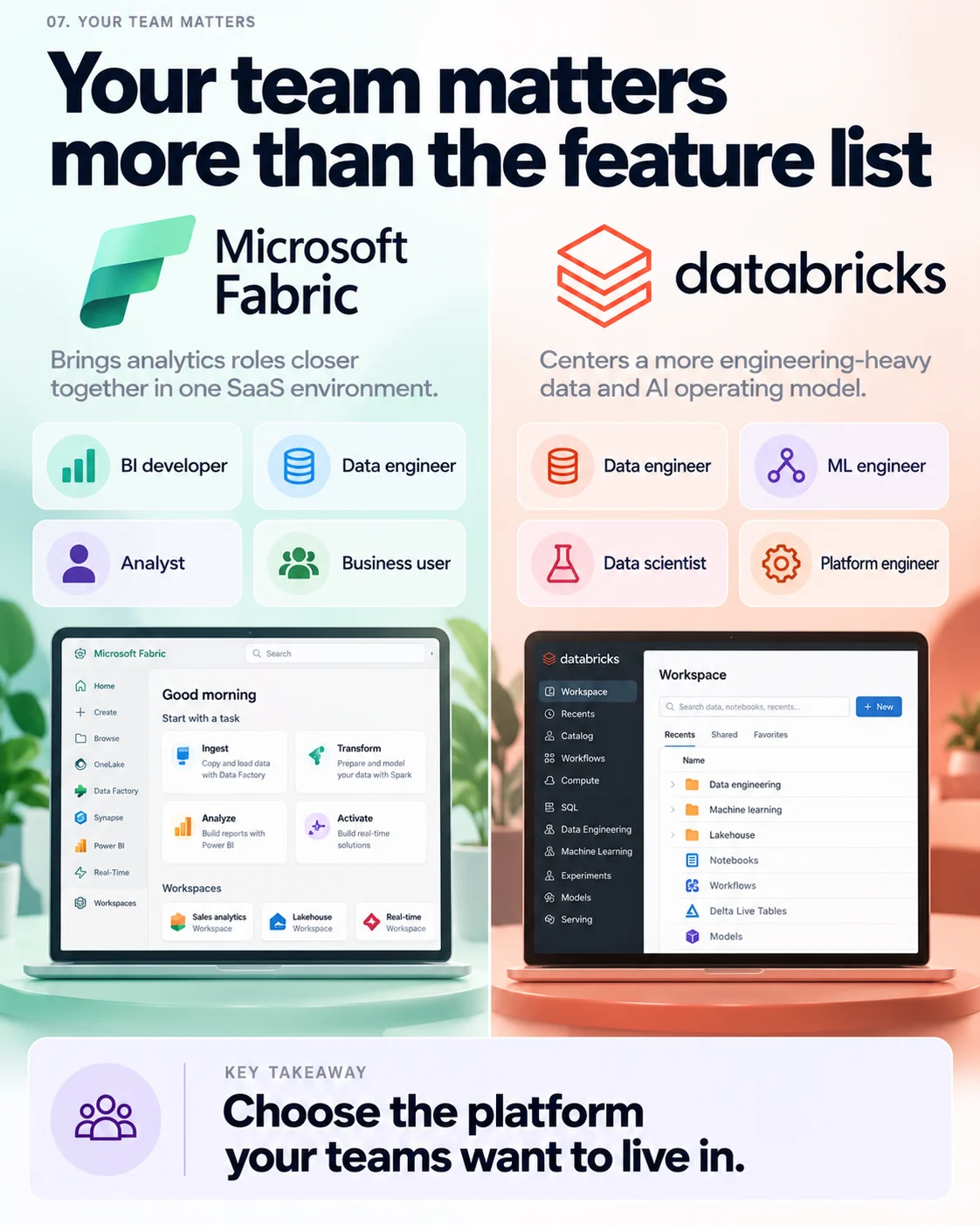
11Your team matters
Platform fit is also an operating-model choice: Fabric brings analytics roles closer together, while Databricks is more engineering-heavy.
Microsoft Fabric overview ↗ -
GPT Image editorial visual
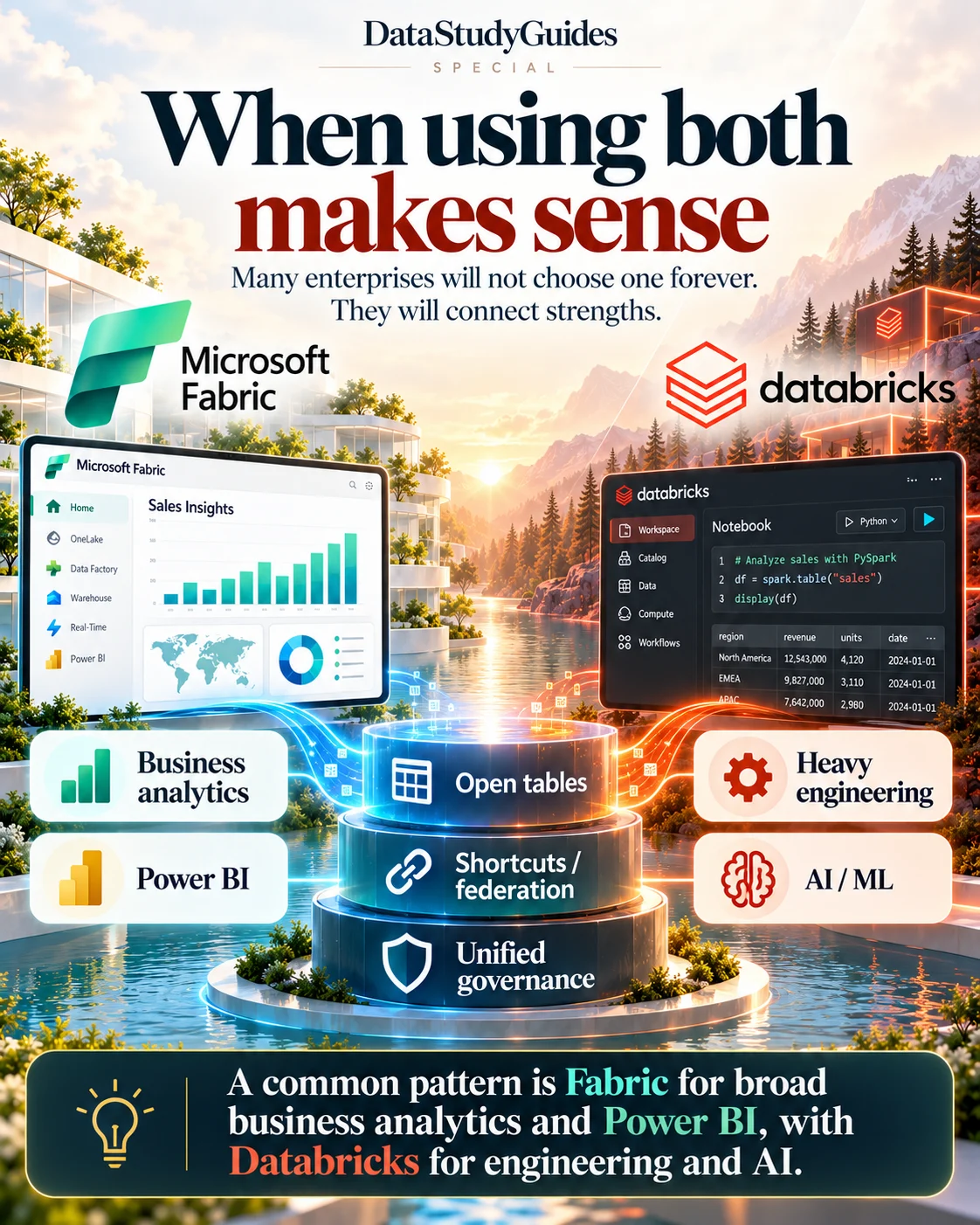
12When using both makes sense
Open tables, shortcuts, and federation make a mixed architecture practical without copying every dataset.
Integrate Microsoft Fabric with external systems ↗ -
GPT Image editorial visual
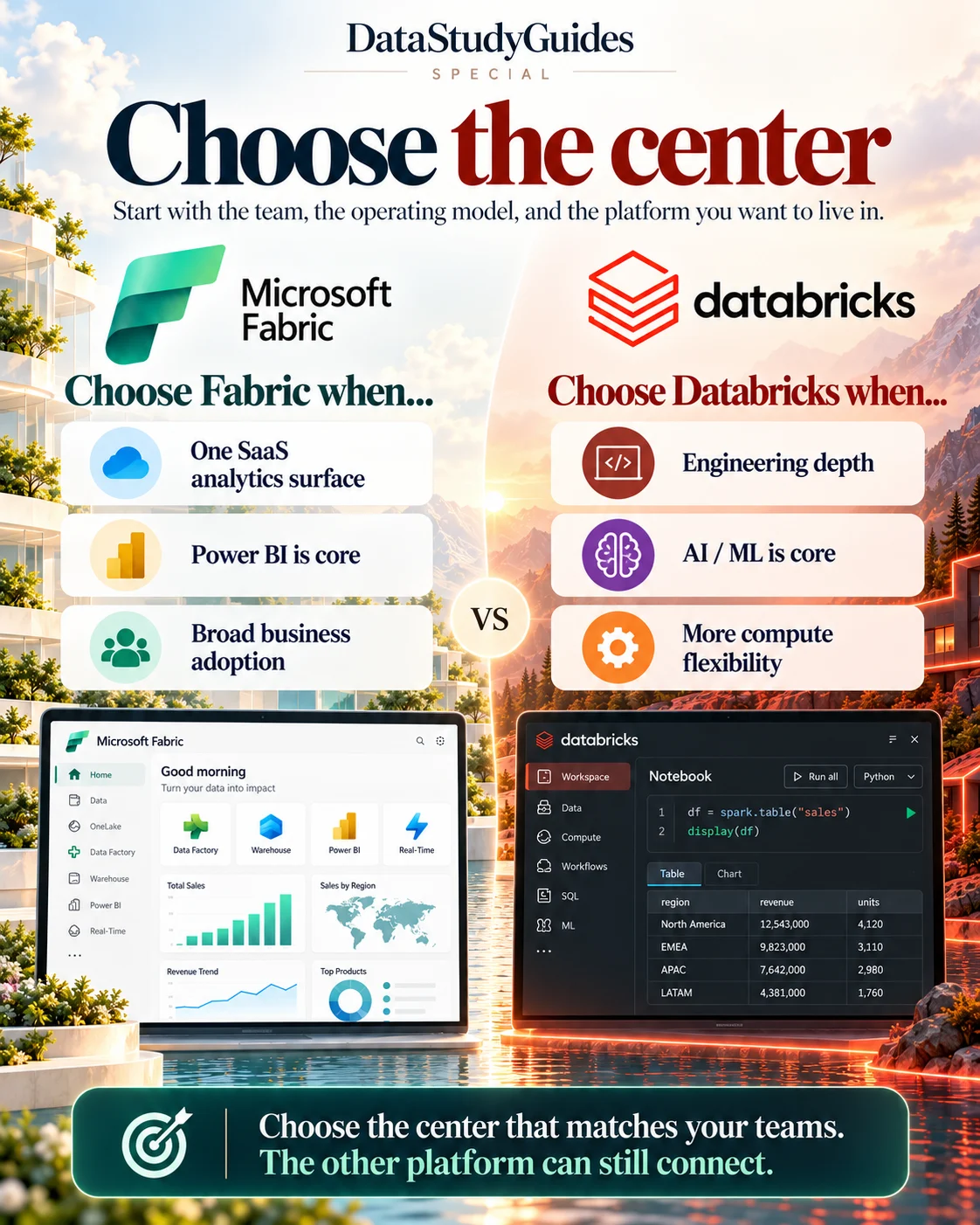
13Choose the center
Choose Fabric when integrated analytics and Power BI are central. Choose Databricks when engineering depth and AI are central.
Microsoft Fabric overview ↗