DP-900 · 4.1.2 · Describe an analytics workload
Analytical data stores
Describe options for analytical data stores
A is relational with a for analytics, a lake stores files with , a combines both.
The data warehouse
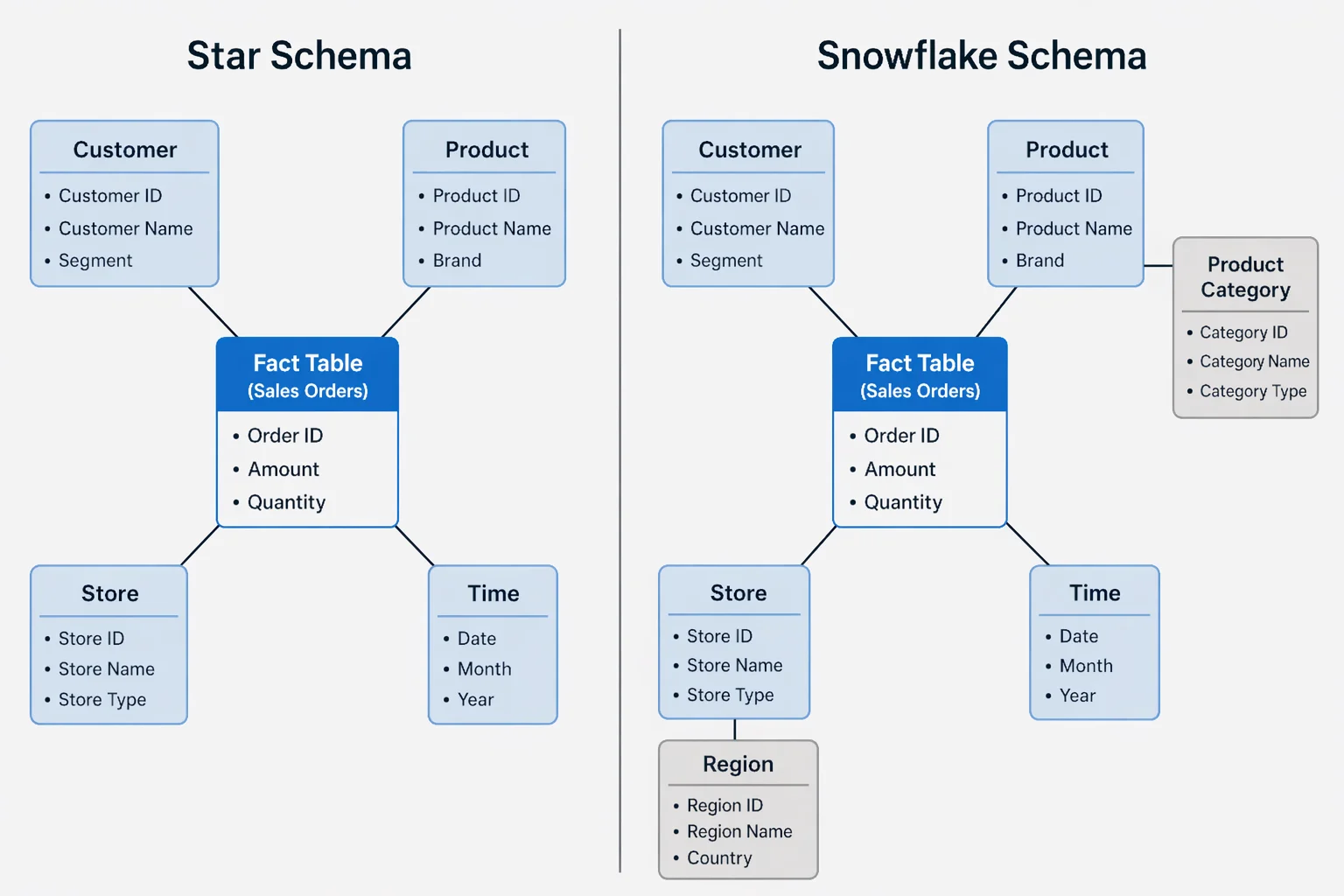
A is relational, with a enforced when data is written. A of numeric linked to is a . When a gets detail tables of its own, it becomes a .
The data lake
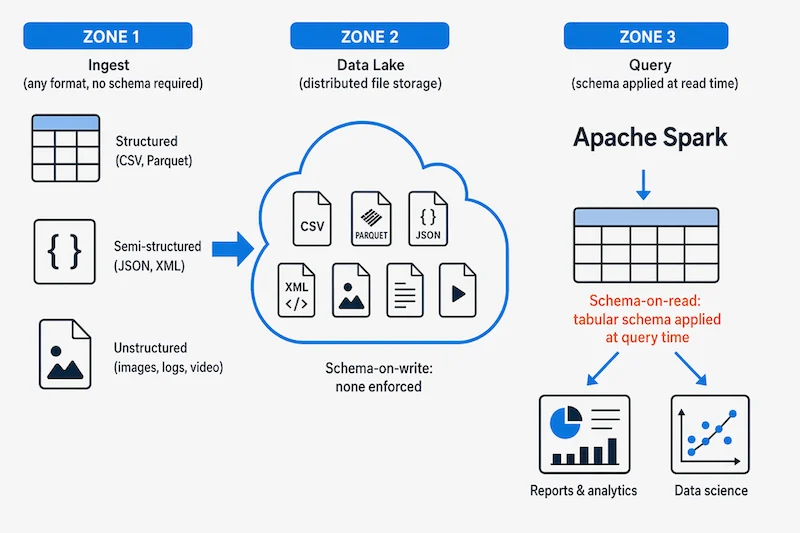
A lake stores files of any shape. No schema is enforced on writing; engines such as apply , at query time. So , and files sit side by side.
The lakehouse
Visuals: Microsoft Learn.
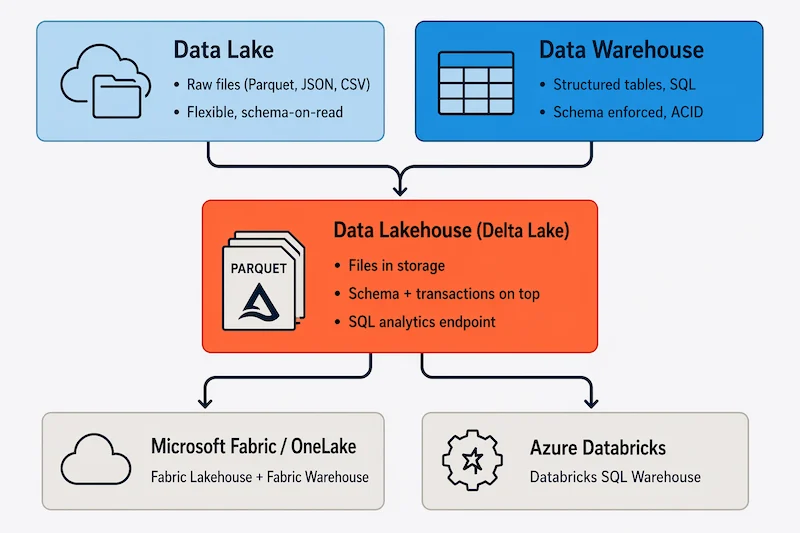
The files stay in the lake, and the format adds schema enforcement, and a endpoint, so you query the files as tables.
Side by side
- Stores
- Relational tables
- Enforced on write
- Recognize by
- Fact and
- Stores
- Files of any shape
- Schema
- Applied on read
- Recognize by
- Mixed formats,
- Stores
- Files with Delta tables on top
- Schema
- Enforced through
- Recognize by
- Delta Lake, endpoint over files
In Microsoft Fabric
A Warehouse fits structured data queried with SQL by many users under strict schema enforcement. A Fabric fits mixed data and machine learning. fits code-first Spark work.
Key points
- : relational, enforced when data is written
- : of linked to
- : a gets further detail tables
- : files of any shape,
- : lake files plus schema, and through
- : Warehouse for SQL, Lakehouse for mixed data and machine learning
Click an underlined term for a one-line explanation, or see them all in the glossary .
Exam trap
belongs to . A store that enforces a before data is written is a , whatever the scenario calls it.
Sources · 2 Microsoft Learn pages Show ▾
Checked on October 4, 2026. Report a problem
Go deeper on Microsoft Learn
Checked against Microsoft Learn on October 4, 2026. Report a problem with this card