DP-900 · 1.2.1 · Describe core data concepts
Data file formats
Describe common formats for data files
A file format favors people or machines; pick it by who reads the file and whether queries scan rows or columns.
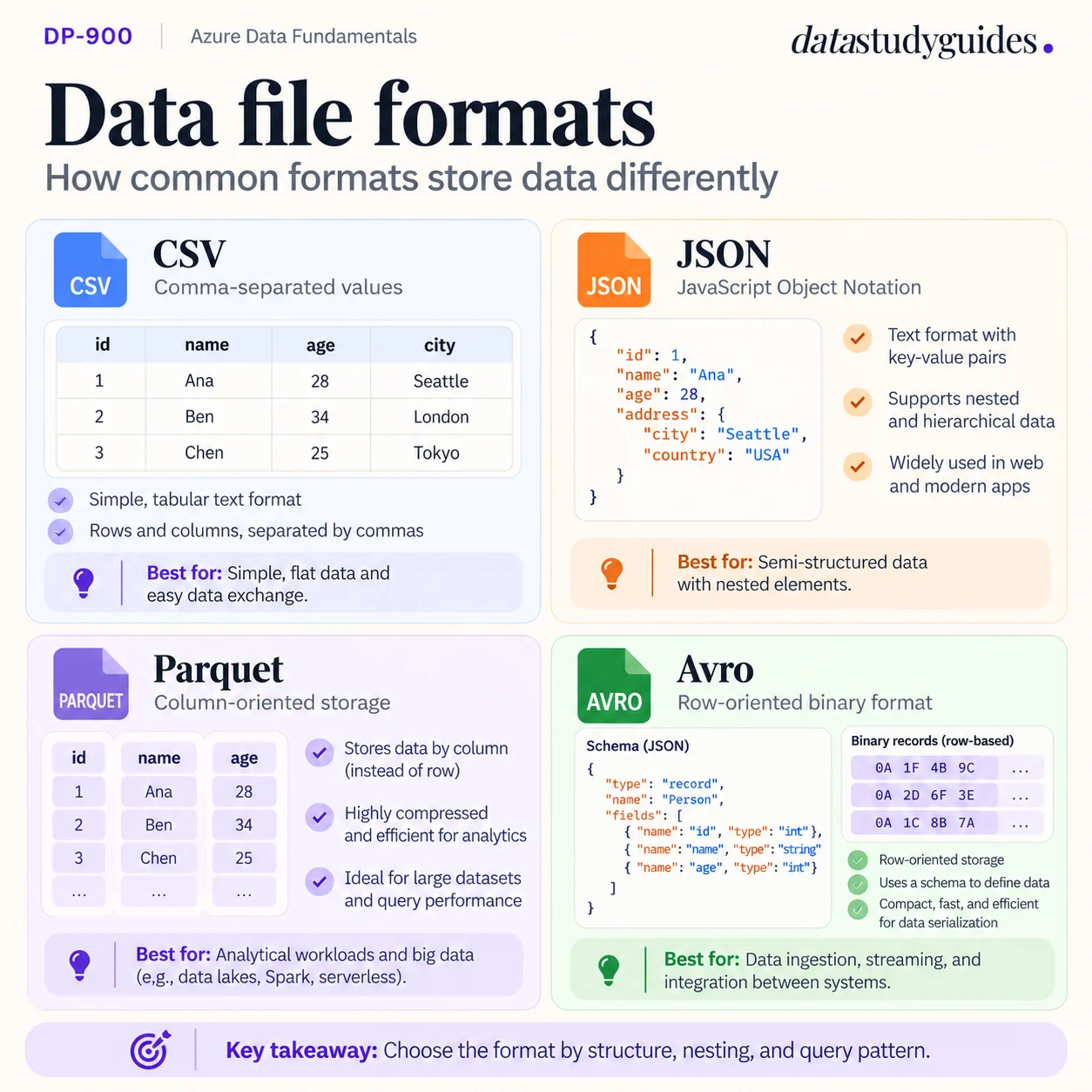
is plain delimited text: one record per line, with an optional header line. nests objects and lists, so it holds and records. Both are easy for people to read.
Parquet: by column
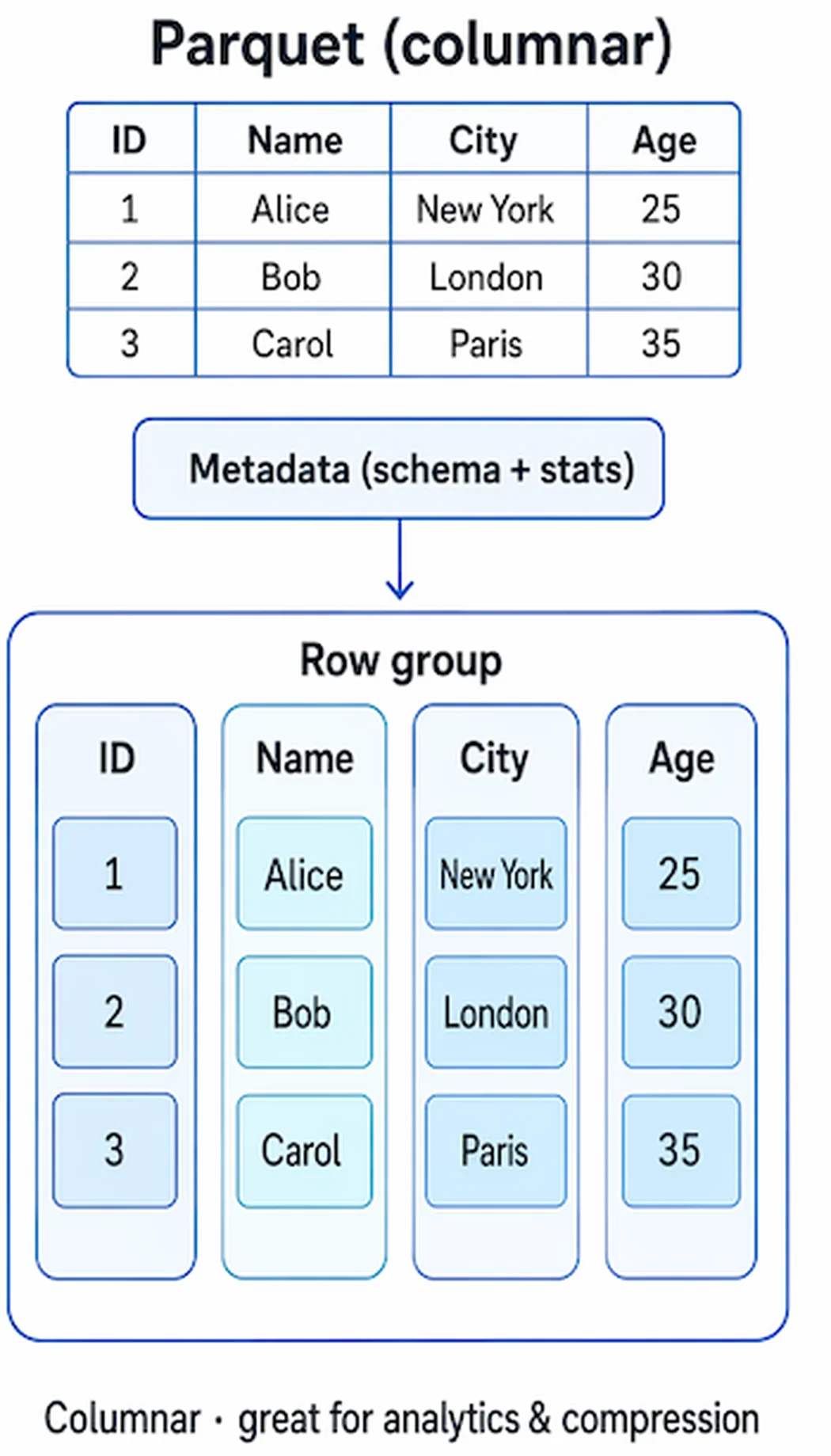
Visual: Microsoft Learn.
groups the data of each row group by column and keeps metadata, so an analytical query reads only the columns and rows it needs.
Avro: by row
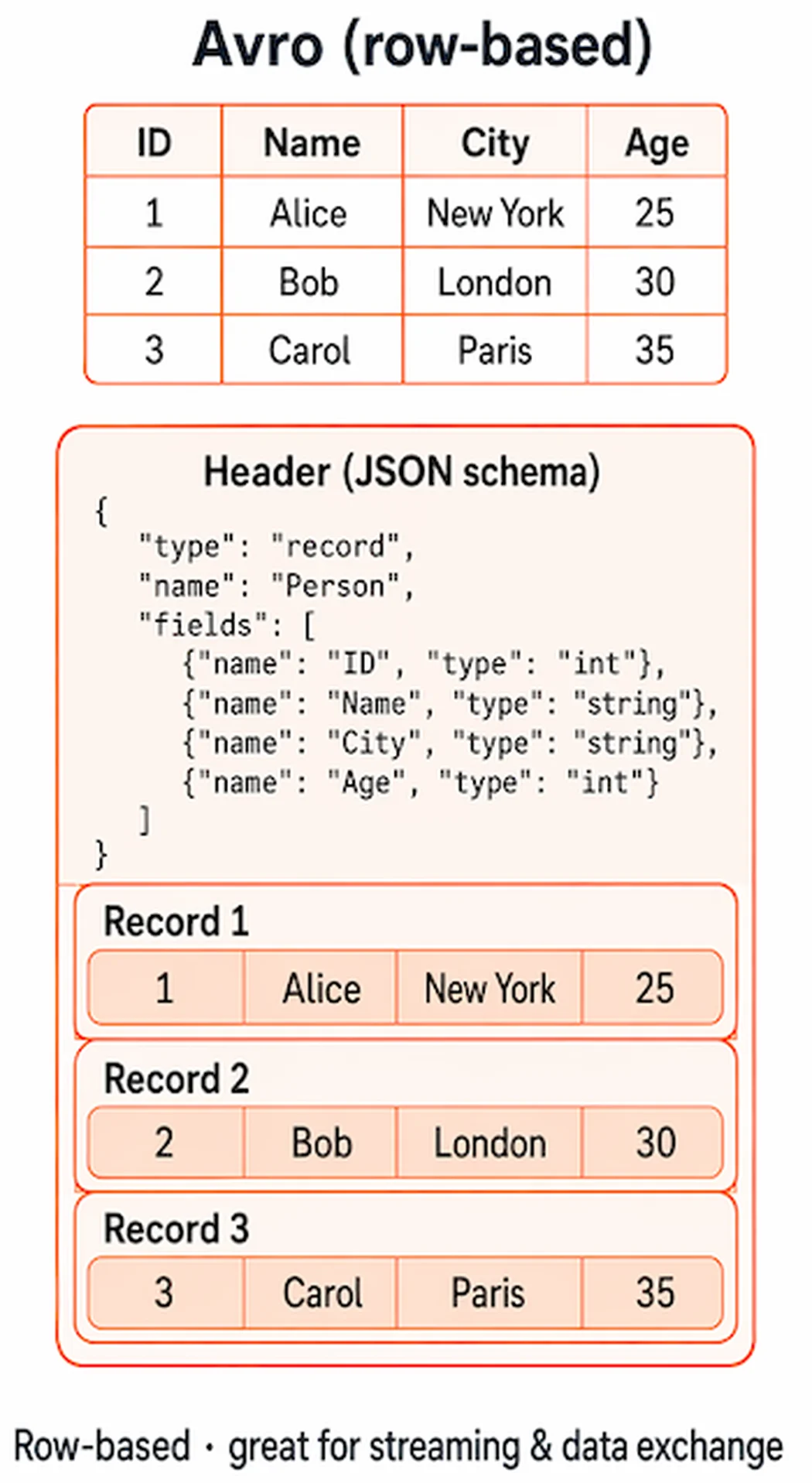
Visual: Microsoft Learn.
stores whole rows as binary data behind a JSON header that describes their structure, so the travels with the file. Good for compact storage and fast writes.
Delta Lake
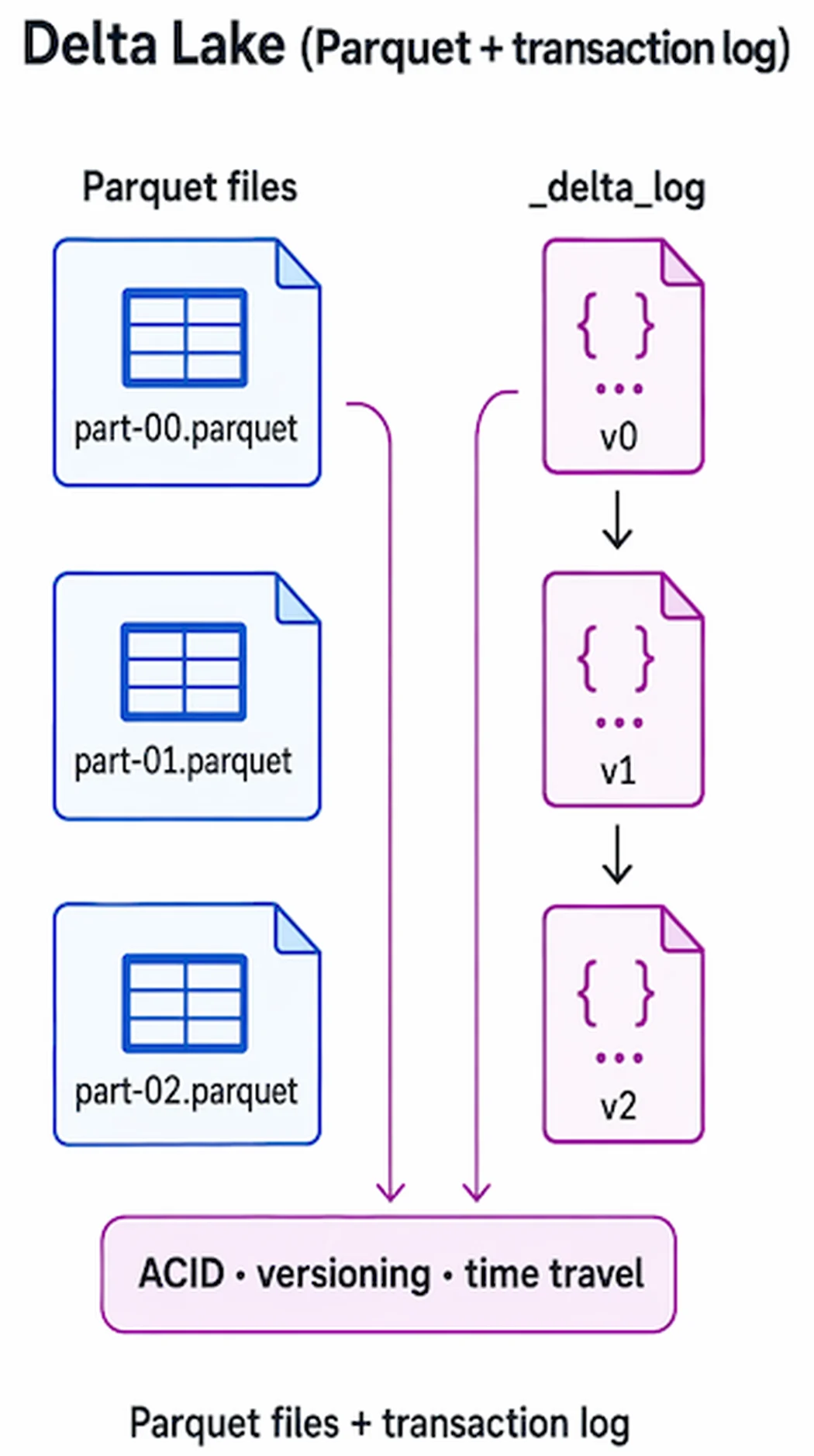
Visual: Microsoft Learn.
adds a log on top of Parquet files. That makes updates in a versioned and compliant.
On the exam, look for (Parquet) against row based (Avro). A is raw binary data, not a text format.
Key points
- : delimited text, one record per line, optional header line
- : named that can nest objects and lists
- : , a query reads only the columns it needs
- : row based, a JSON header describes the binary records
- : Parquet files plus a log
- : raw binary bytes, not readable text
Click an underlined term for a one-line explanation, or see them all in the glossary .
Exam trap
and get swapped. Parquet stores data by column for analytical reads; Avro stores it by row and carries its .
Sources · 1 Microsoft Learn page Show ▾
Checked on October 4, 2026. Report a problem
Go deeper on Microsoft Learn
Checked against Microsoft Learn on October 4, 2026. Report a problem with this card