DP-900 · 1.3.2 · Describe core data concepts
Analytical workloads
Describe features of analytical workloads
Analytical () systems read large volumes of historical data to report on trends; they are read mostly and work from snapshots.
Visual: Microsoft Learn.
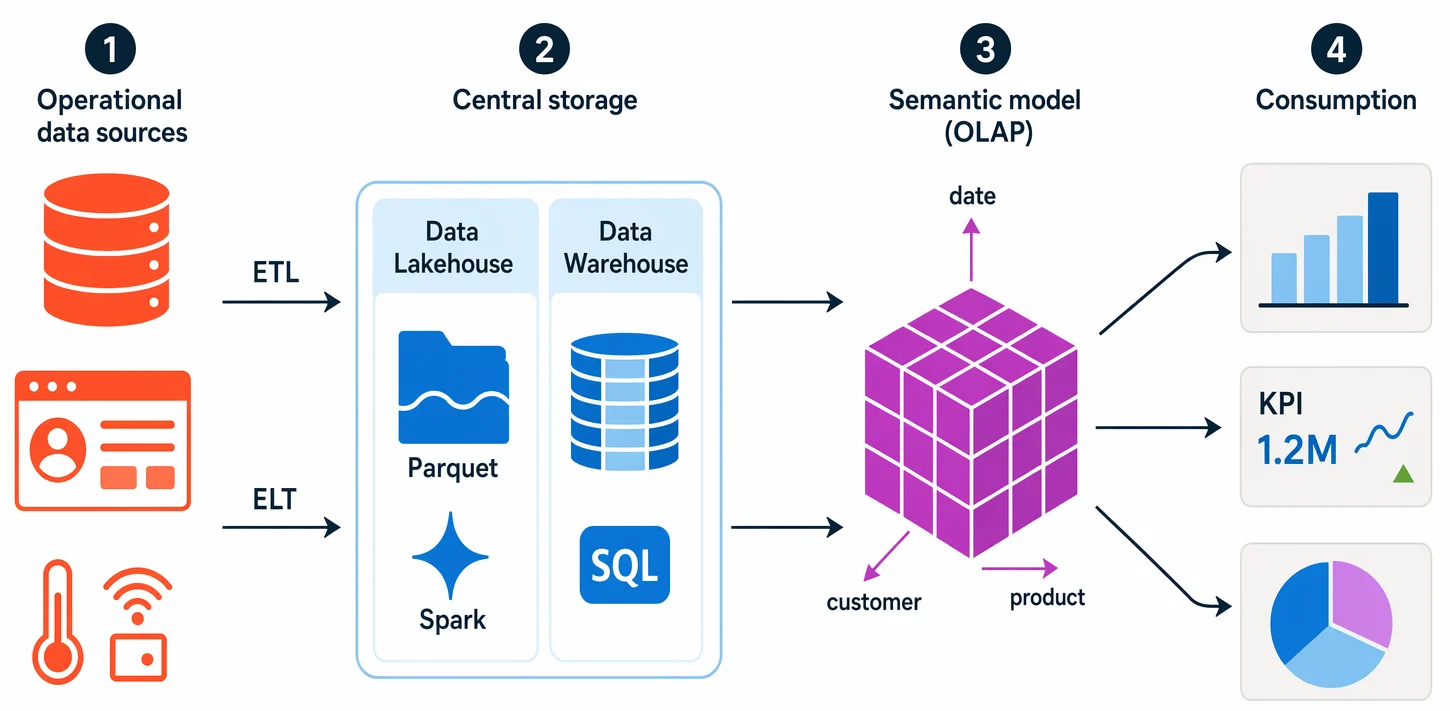
Analytical processing () looks back across large volumes of historical data. It is read mostly and works from snapshots. Data flows from the operational systems into a lake, then a or , then a , then reports.
The stages
- 1 transforms before loading, loads first and transforms after
- 2Files at scale, used directly by data scientists
- 3 or A relational for queries, used by
- 4Preaggregated by , also called an model
- 5Reports and What business users consume
Warehouse and lakehouse
A data warehouse stores data in a relational optimized for reading. A lakehouse adds that relational querying on top of a 's file storage; is the common pattern there.
The medallion architecture
Visual: Microsoft Learn.
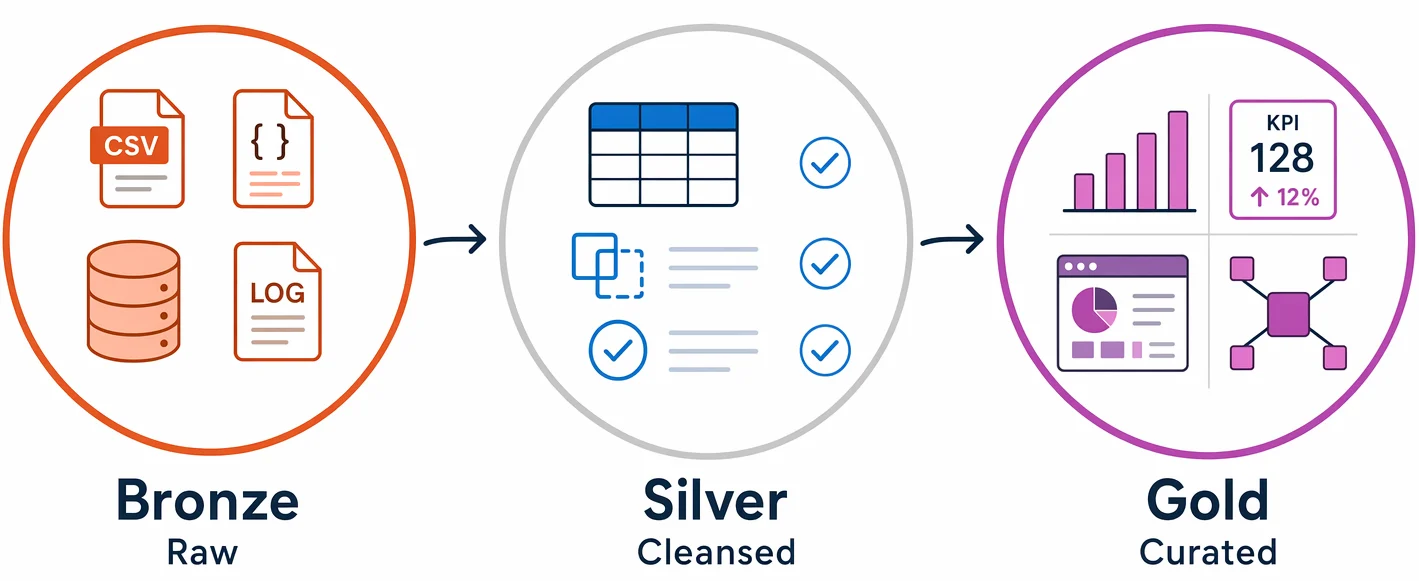
A lakehouse is commonly organized in three layers: bronze keeps the raw data, silver holds cleansed and conformed data, gold holds aggregated, business-ready data. Three layers, no more.
On the exam, look for OLAP, semantic model, data warehouse, lakehouse or bronze, silver, gold.
Key points
- : online analytical processing, read mostly, historical snapshots
- versus : transform before loading, or load first and transform after
- : relational optimized for read queries and reporting
- : warehouse-style querying on top of file storage
- : preaggregated across , for fast reports
- : bronze raw, silver cleansed, gold business-ready
Click an underlined term for a one-line explanation, or see them all in the glossary .
Exam trap
Analytical systems consume operational data; they do not replace the transactional systems that create it. A is today's name for an model.
Sources · 1 Microsoft Learn page Show ▾
Checked on October 4, 2026. Report a problem
Go deeper on Microsoft Learn
Checked against Microsoft Learn on October 4, 2026. Report a problem with this card