DP-900 · 4.1.1 · Describe an analytics workload
Data ingestion and processing
Describe considerations for data ingestion and processing
moves data from its sources into an analytical store; transforms it before the load, after.
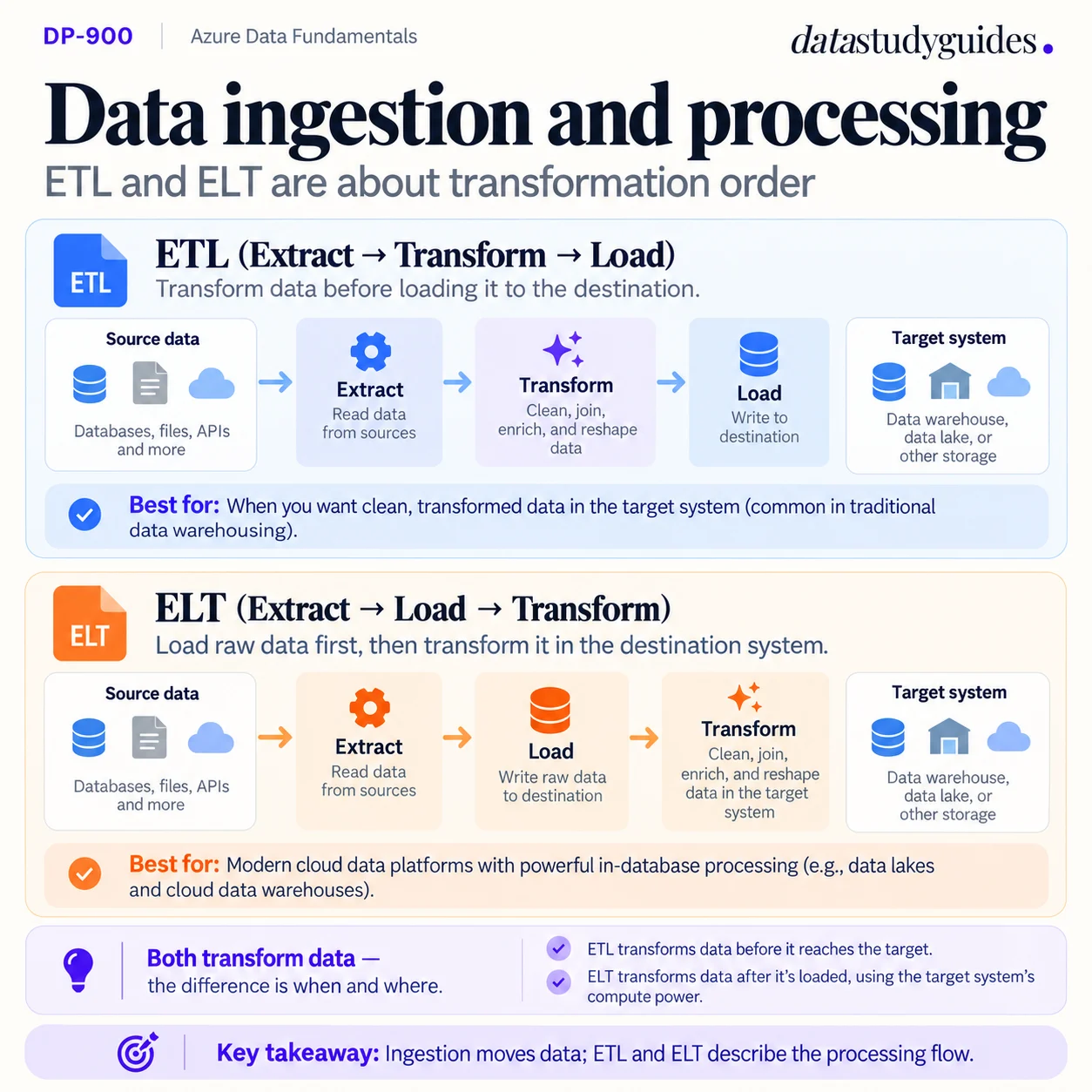
transforms the data before it is loaded into the analytical store. loads the data as it came and transforms it afterward, inside the store. Both transform; only the moment differs.
Where the data comes from
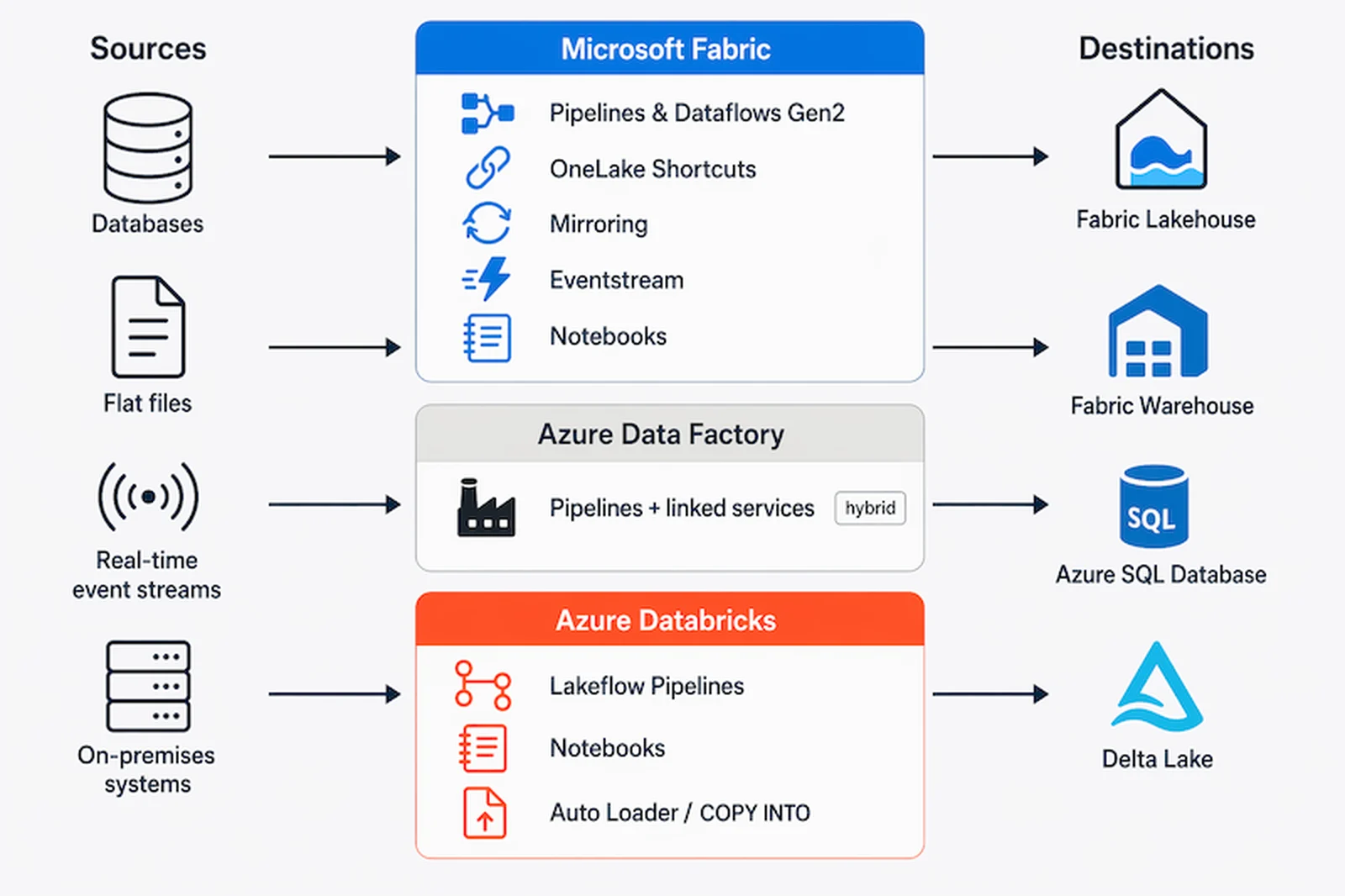
Visual: Microsoft Learn.
brings data from databases, files, real-time event streams and on-premises systems into a lake or . loads and continuous streams often run side by side in one solution.
What a pipeline is made of
- 1Holds the connection details for a source
- 2ActivitiesRead, move or transform the data, in order
- 3Linked serviceHolds the connection details for the destination
A is only the connection, not the transformation and not the output table. The heavy work is spread across multi-node clusters, which lets a scale to billions of rows.
On the exam, before loading points to ETL and after loading to ELT.
Key points
- : from transactional stores, files and streams into a lake or
- : extract, transform, then load
- : extract, load, then transform in the store
- and real time: often both in the same solution
- Scale: processing is spread across multi-node clusters
- : activities, connected to data through
Click an underlined term for a one-line explanation, or see them all in the glossary .
Exam trap
and both transform the data. They differ only in when: in ELT the data lands in the store untransformed.
Sources · 2 Microsoft Learn pages Show ▾
Checked on October 4, 2026. Report a problem
Go deeper on Microsoft Learn
Checked against Microsoft Learn on October 4, 2026. Report a problem with this card