DP-900 · 1.1.2 · Describe core data concepts
Semi-structured data
Describe the features of semi-structured data
has named fields, but the fields can differ from one record to the next and can nest.
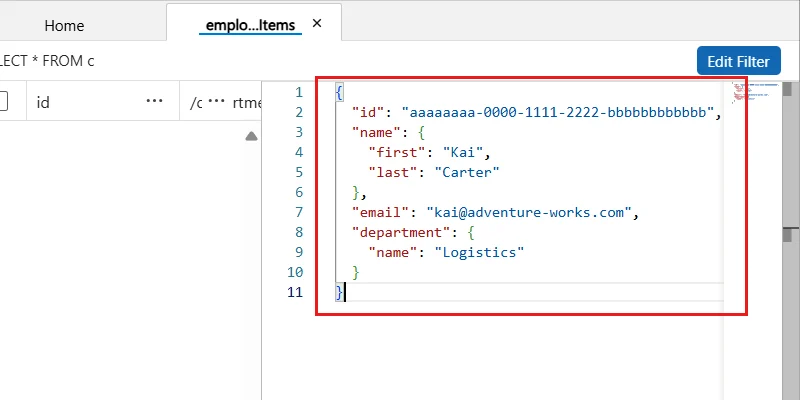
Visual: Microsoft Learn.
This item names its own fields and nests objects inside them. Another item could add a phone number or leave a field out. That is : there is structure, and it may differ per record.
Two records, different fields
{ "firstName": "Ana",
  "emails": ["[email protected]", "[email protected]"] }
{ "firstName": "Li",
  "phone": "555 0100",
  "address": { "city": "Leeds" } }
Ana has a list of two email addresses and no phone. Li has a phone and a nested address. Neither record is wrong.
Telling it apart
- Fields
- The same for every record
- Missing data
- The column stays, the value is empty
- Nesting
- No, values sit in columns
- Typical form
- Table
- Fields
- Named, but may differ per record
- Missing data
- The field is simply absent
- Nesting
- Yes, objects and lists
- Typical form
- document
A table with many empty columns still has a fixed , so it is . store one JSON document per . On the exam, look for fields vary between records, JSON or documents.
Key points
- Named fields: every value carries its own field name
- Flexible : records of the same may have different fields
- Nesting: a field can hold an object or a list of values
- : the most common format for
- : store one JSON document per entity
- Not this: a table with many empty columns still has a fixed schema
Click an underlined term for a one-line explanation, or see them all in the glossary .
Exam trap
A flexible is still structure. is , not , even though it is plain text.
Sources · 2 Microsoft Learn pages Show ▾
Checked on October 4, 2026. Report a problem
Go deeper on Microsoft Learn
Checked against Microsoft Learn on October 4, 2026. Report a problem with this card