AI-200 · 4.1.1 · Secure, monitor, and troubleshoot Azure solutions
Key Vault rotation
Secure secrets by using Azure Key Vault, including rotation and retrieval
Use to read secrets, then rotate them by creating new versions from expiry-driven automation.
Read secrets without stored credentials
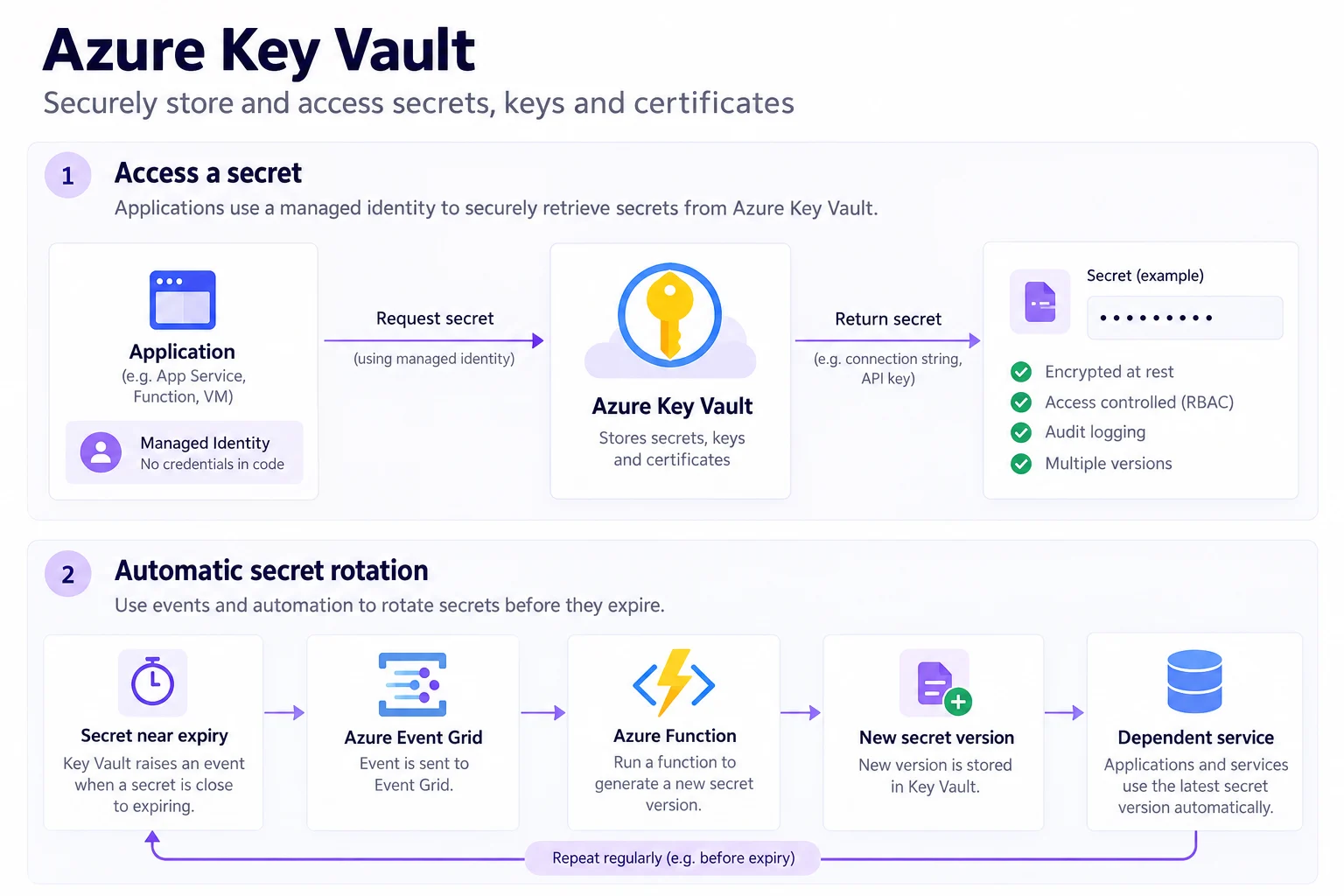
Store secrets in and let the application authenticate with a . The identity still needs the right data-plane role. DefaultAzureCredential makes the same code work with a developer sign-in locally and managed identity in Azure.
Rotate by creating a new version
A secret value does not rotate itself. A near-expiry event can trigger automation that creates a new secret version and updates the dependent system.
client.set_secret("db-password", new_password)Readers that request the latest version pick up the replacement on their next fetch. A can cache its value, so use the platform refresh mechanism or a configuration change when the application must see the new version sooner.
Key points
- SecretClient: built from vault URL and credential; `get_secret` returns latest version
- : your `az login` on a laptop, a in Azure
- Roles: Secrets User reads values, Reader sees metadata, Secrets Officer changes secrets
- : `@Microsoft.KeyVault(SecretUri=...)` as an value
Click an underlined term for a one-line explanation, or see them all in the glossary .
Exam trap
A caches its value, refreshing about every 24 hours; a configuration change or refresh call picks up a new version sooner.
Sources · 4 Microsoft Learn pages Show ▾
- Quickstart: Azure Key Vault secret client library for Python
- Provide access to Key Vault with Azure role-based access control
- Use Key Vault references as app settings
- Understanding autorotation in Azure Key Vault
Checked on October 4, 2026. Report a problem
Go deeper on Microsoft Learn
- Quickstart: Azure Key Vault secret client library for Python
- Provide access to Key Vault with Azure role-based access control
- Use Key Vault references as app settings
- Understanding autorotation in Azure Key Vault
Checked against Microsoft Learn on October 4, 2026. Report a problem with this card