DP-600 · 2.2.3 · Prepare data
Star schema
Implement a star schema for a lakehouse or warehouse
Model measurable events in a and descriptive context in dimensions connected by one-to-many .
The core idea
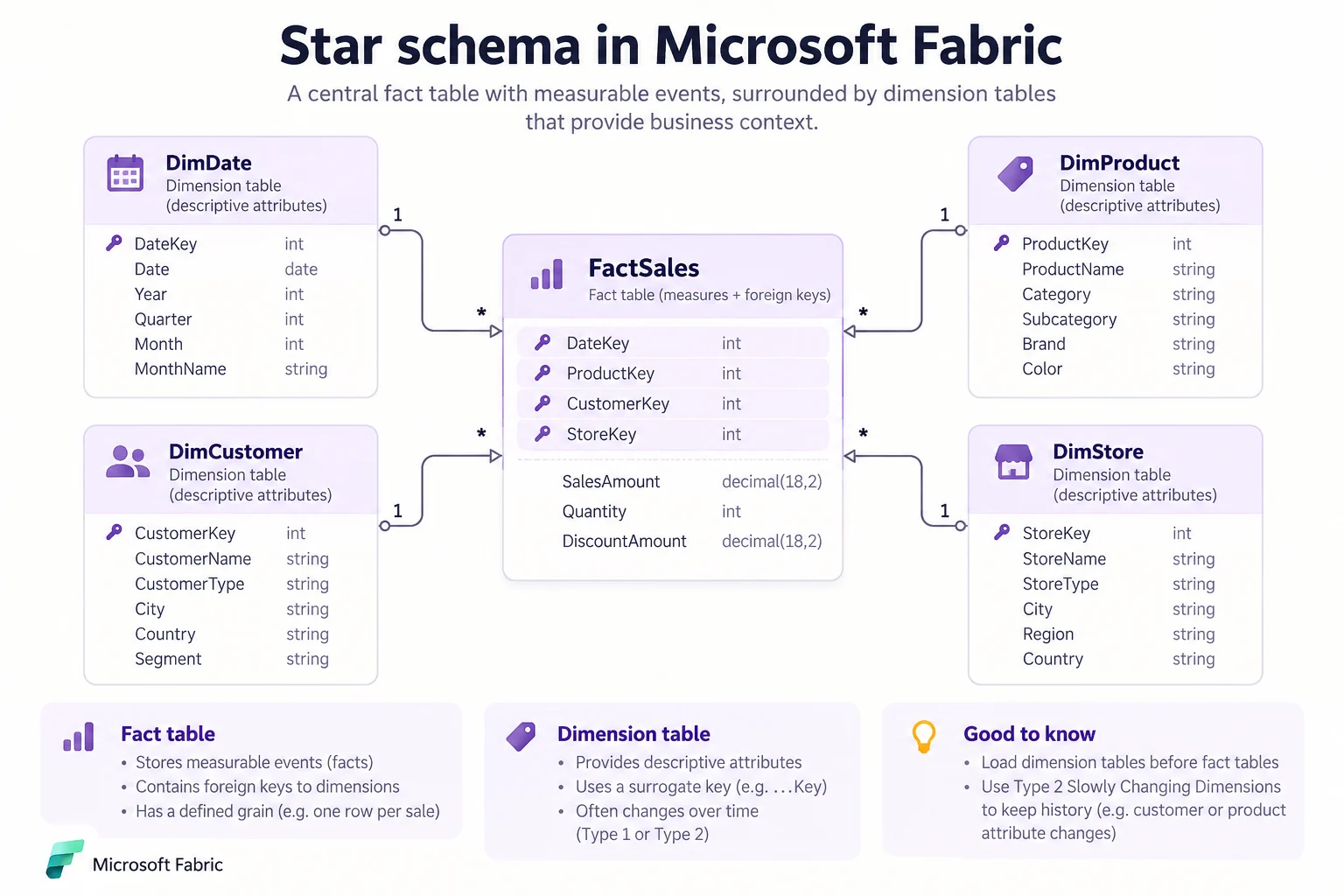
A separates measurable events from descriptive context. The holds and the keys of related dimensions. Each dimension holds the attributes used for filtering and grouping.
Define the fact before loading. Give dimensions and load them before facts so fact rows can resolve those keys.
When a dimension must preserve attribute history, use a Type 2 instead of overwriting the old value.
Key points
- Fact: plus dimension keys at one defined
- Dimension: descriptive attributes with a unique
- Load order: dimensions before facts
- History: Type 2 adds a new dimension row version
Click an underlined term for a one-line explanation, or see them all in the glossary .
Exam trap
Key constraints in a are declared NOT ENFORCED. They help tools see the but do not reject bad rows, so your own load process must check the keys.
Sources · 4 Microsoft Learn pages Show ▾
- Describe dimensional schema types (Design dimensional models for analytics in Microsoft Fabric)
- Modeling dimension tables in Warehouse (Microsoft Fabric)
- IDENTITY columns in Fabric Data Warehouse (Microsoft Fabric)
- Load tables in a dimensional model (Microsoft Fabric)
Checked on October 4, 2026. Report a problem
Go deeper on Microsoft Learn
- Describe dimensional schema types (Design dimensional models for analytics in Microsoft Fabric)
- Modeling dimension tables in Warehouse (Microsoft Fabric)
- IDENTITY columns in Fabric Data Warehouse (Microsoft Fabric)
- Load tables in a dimensional model (Microsoft Fabric)
Checked against Microsoft Learn on October 4, 2026. Report a problem with this card