DP-600 · 1.2.6 · Maintain a data analytics solution
Reusable Power BI assets
Create and update reusable assets, including Power BI template (.pbit) files, Power BI data source (.pbids) files, and shared semantic models
Use for reusable report structure, for a prepared connection, and for one governed model behind many reports.
The core idea
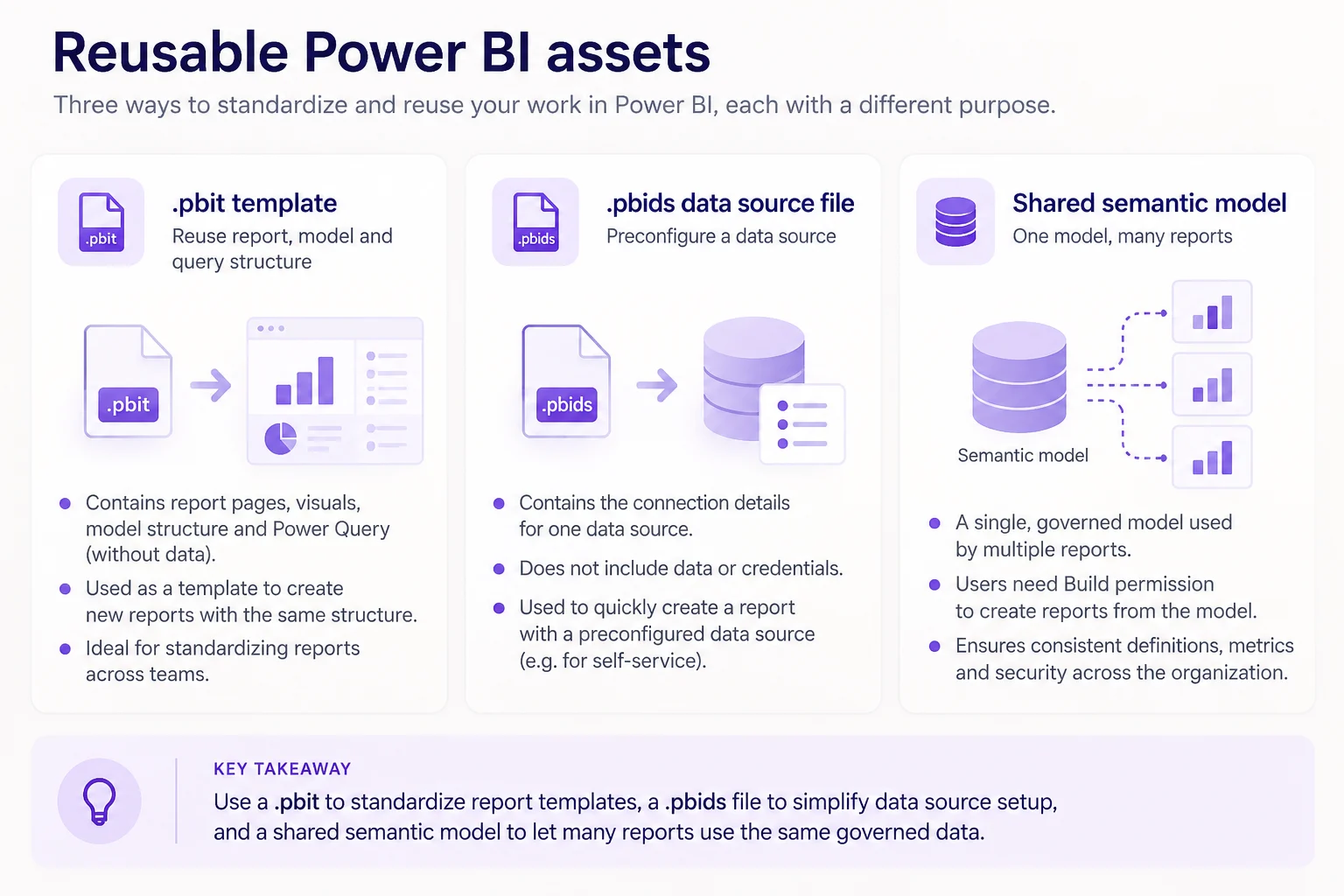
A file starts a new report with the same pages, model, and Power Query definitions but no data. A file preconfigures one data source and contains no credentials.
A is different: the model remains centralized in Fabric while many reports connect to it. This keeps , , and governance consistent.
Use the reusable asset that matches what you want to standardize: structure, connection setup, or the model itself.
Key points
- : report, model, and queries without data
- : one prepared data source without credentials
- Shared model: one governed model powers many reports
- Build: required to create reports from a shared model
Click an underlined term for a one-line explanation, or see them all in the glossary .
Exam trap
A or file gives each author their own new model. Only a keeps one model behind many reports.
Sources · 4 Microsoft Learn pages Show ▾
- Create and use report templates in Power BI Desktop
- Data sources in Power BI Desktop
- Introduction to semantic models across workspaces
- Control the use of semantic models across workspaces
Checked on October 4, 2026. Report a problem
Go deeper on Microsoft Learn
- Create and use report templates in Power BI Desktop
- Data sources in Power BI Desktop
- Introduction to semantic models across workspaces
- Control the use of semantic models across workspaces
Checked against Microsoft Learn on October 4, 2026. Report a problem with this card