DP-750 · 4.1.3 · Deploy and maintain data pipelines and workloads
Design job task logic
Design task logic for Lakeflow Jobs
Compose jobs from focused tasks, explicit dependencies, runtime values, conditions, and retry behavior.
See tasks and branches
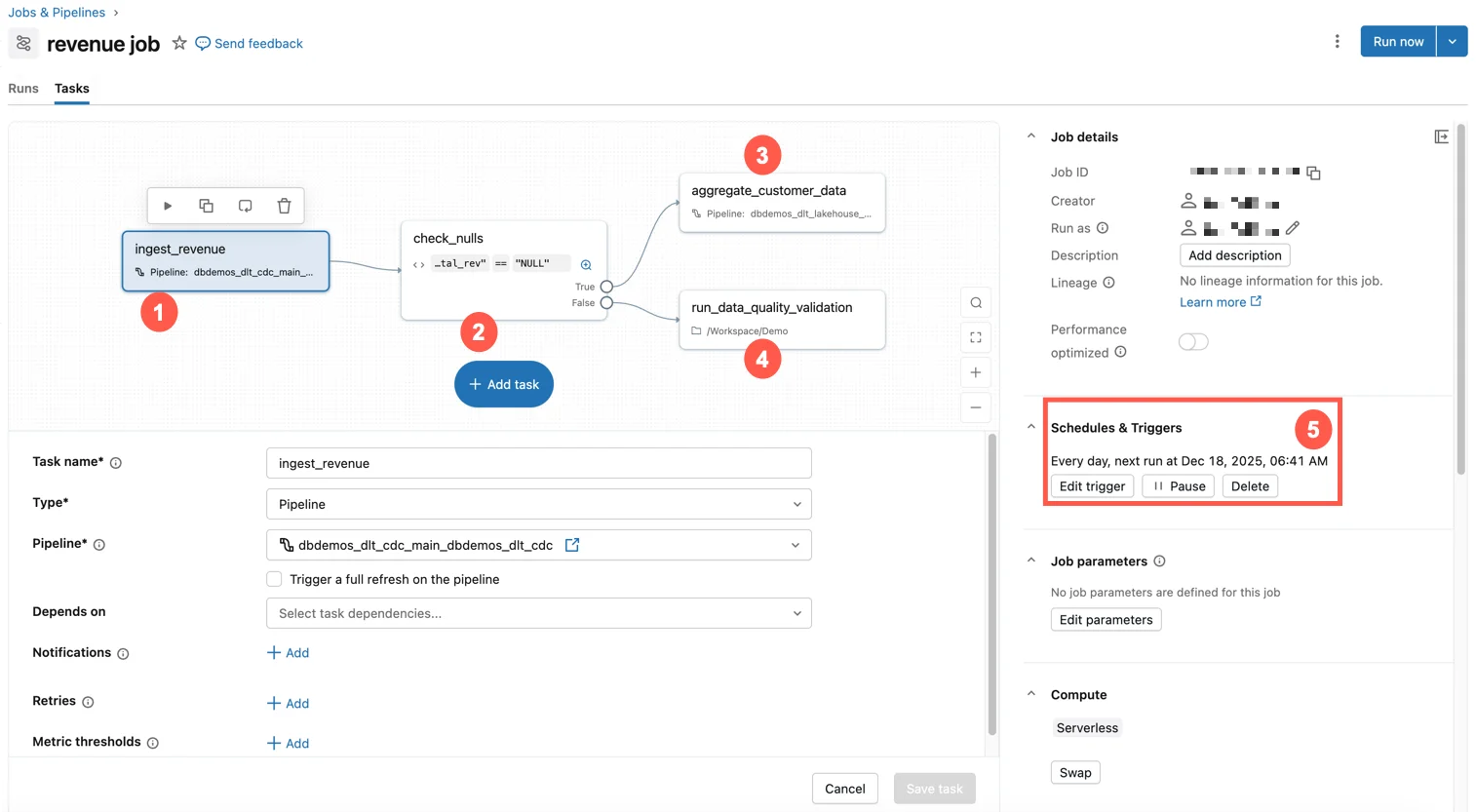
Focused tasks make dependencies, retries, branches, and monitoring visible. They are easier to recover than one large notebook that hides every step.
Pass runtime information explicitly
- 1Upstream taskComputes a value
- 2Task valuePublishes runtime context
- 3If/elseEvaluates the value
- 4Branch taskRuns the selected path
Use task values or dynamic references instead of hidden coupling through ad hoc external state.
Branch on the right signal
Run if
- Signal
- Upstream status
- Example
- Run cleanup after failure
If/else task
- Signal
- Runtime value
- Example
- Route by row count
Retry only failures that might succeed on another attempt.
Key points
- Task: One executable unit with its own configuration
- Dependency: Connects upstream and downstream work
- Task values: Pass runtime context between tasks
- Condition: Branch using status or computed values
Exam trap
Do not use static hard-coded values when a downstream task needs runtime output from an upstream task.
Sources · 2 Microsoft Learn pages Show ▾
Checked on October 4, 2026. Report a problem
Go deeper on Microsoft Learn
Checked against Microsoft Learn on October 4, 2026. Report a problem with this card