DP-750 · 3.4.3 · Prepare and process data
Schema enforcement and drift
Implement schema enforcement and manage schema drift
Enforce stable target contracts while configuring each ingestion, parser, streaming, and table layer for expected schema changes.
Connect schema rules to pipeline outcomes
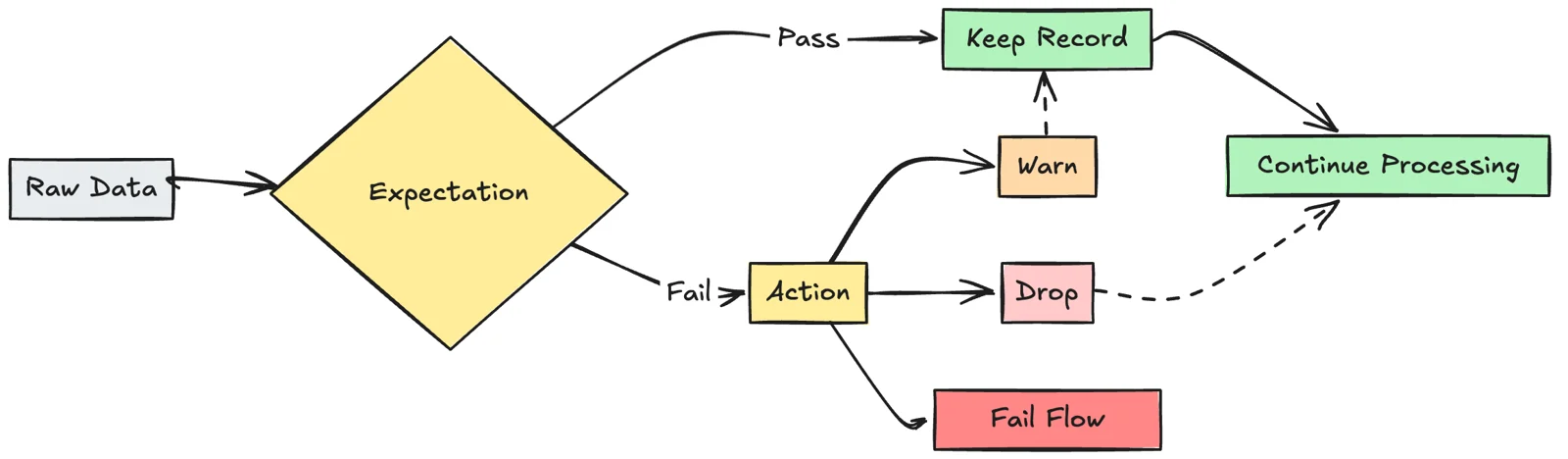
Schema drift becomes an operational issue when incoming structure no longer matches the contract. The expectation flow shows how a governed pipeline responds; the diagrams below distinguish enforcement from controlled evolution.
Separate protection from change
Schema enforcement
- Focus
- Protect target contract
- Risk
- Incompatible write
- Response
- Reject or control
Schema drift
- Focus
- Detect source change
- Risk
- New or changed fields
- Response
- Evolve, quarantine, or fail
Schema enforcement prevents incompatible writes from silently changing the target table.
Evolution spans the whole path
- 1SourceAdds or changes a field
- 2Connector or parserDetects the new shape
- 3Streaming engineApplies its evolution policy
- 4Delta targetAccepts or rejects the change
Each layer can have different schema behavior.
Be explicit in production
Allow only changes you intend to support. Auto Loader discovering a new source column does not automatically mean the downstream Delta table should evolve.
Key points
- Enforcement: Rejects incompatible writes to a defined schema
- Evolution: Allows selected schema changes such as new columns
- Drift: Source structure changes over time
- Layers: Connector, parser, engine, and dataset evolve independently
Exam trap
Auto Loader schema evolution does not automatically evolve the downstream Delta table unless that layer is configured too.
Sources · 2 Microsoft Learn pages Show ▾
Checked on October 4, 2026. Report a problem
Go deeper on Microsoft Learn
Checked against Microsoft Learn on October 4, 2026. Report a problem with this card