DP-750 · 4.1.1 · Deploy and maintain data pipelines and workloads
Pipeline operation order
Design order of operations for a data pipeline
Model dependencies from data requirements so independent work runs in parallel and dependent work starts only when prerequisites finish.
Read the workflow as a DAG
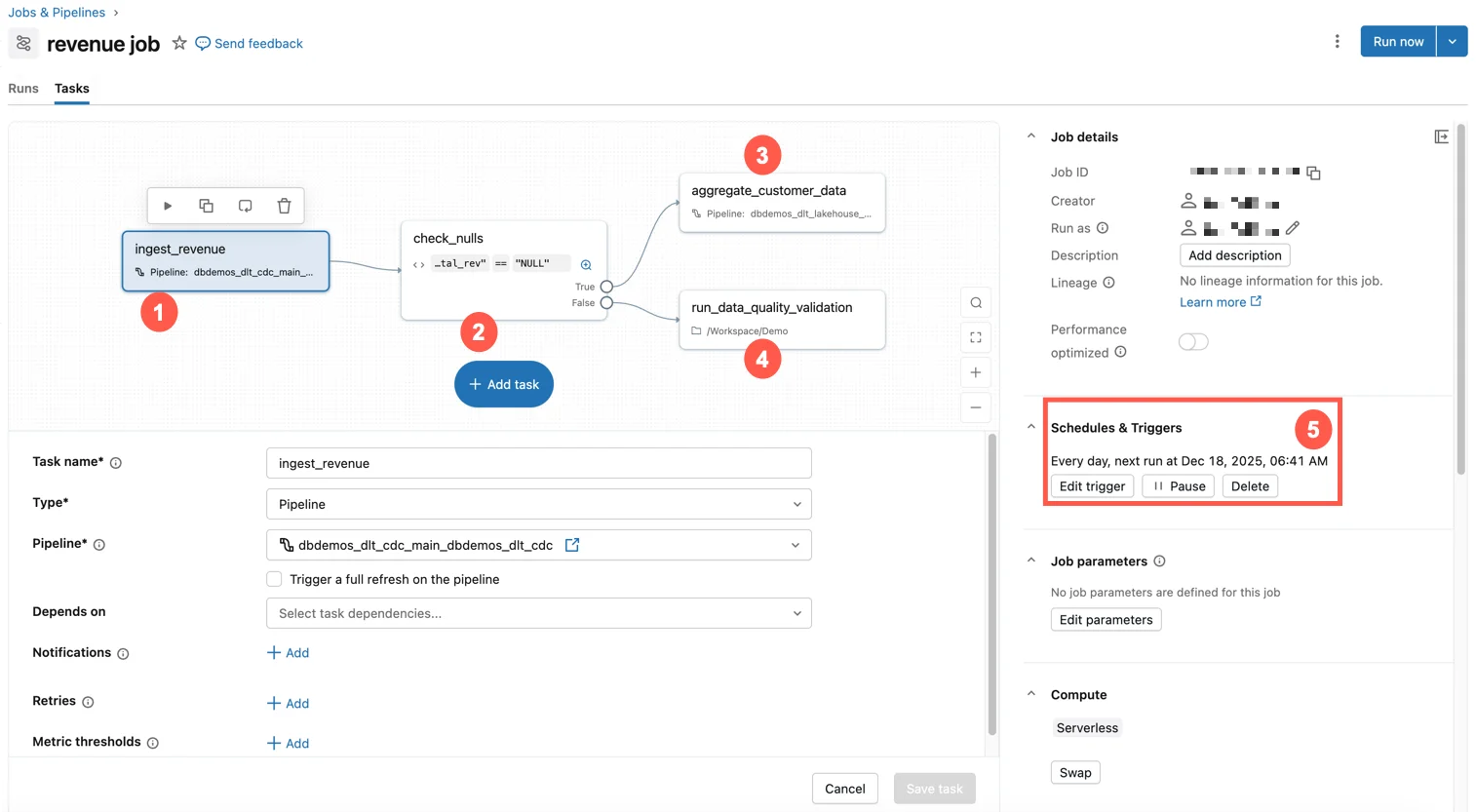
The graph should represent real data and control dependencies. Independent work belongs on parallel branches; downstream work waits only for the prerequisites it actually needs.
Parallelize independent tasks
- 1Ingest AStarts immediately
- 2Ingest BStarts independently
- 3TransformWaits for both inputs
- 4PublishWaits for transformed result
Task order should follow dependencies rather than the order in which tasks were created.
Finalize deliberately
- Run only after successAll succeeded
- Cleanup must always runAll done
Use status conditions for cleanup and notification rather than burying finalization logic inside notebooks.
Key points
- Dependency: Defines which upstream tasks must finish first
- Parallelism: Independent tasks can run concurrently
- Run if: Controls execution from upstream task status
- Cleanup: Use completion conditions for recovery or finalization tasks
Exam trap
Do not serialize independent tasks merely because they were created in that order.
Sources · 1 Microsoft Learn page Show ▾
Checked on October 4, 2026. Report a problem
Go deeper on Microsoft Learn
Checked against Microsoft Learn on October 4, 2026. Report a problem with this card