PL-300 · 1.3.7 · Prepare the data
Reference or duplicate queries
Identify when to use reference or duplicate queries and the resulting impact
Duplicate makes an independent copy; Reference stays dependent on the original query.
Duplicate
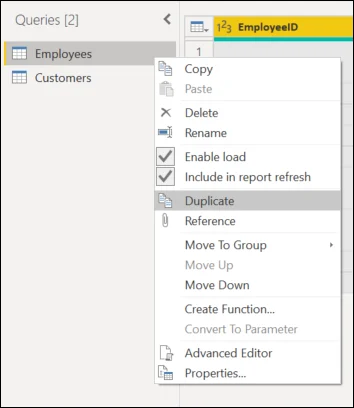
Duplicate creates an independent copy of the current query steps. Later edits to the original and the duplicate do not flow into each other.
Reference
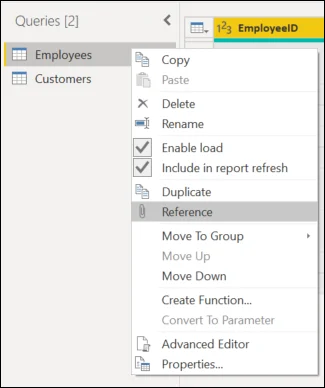
Reference creates a new query whose starting point is the result of another query. Changes to the upstream query therefore flow downstream.
A reference is not a shared cached result: dependent queries can still rerun the upstream work during refresh.
Dependency is the deciding factor
Use Reference when several outputs should inherit the same upstream cleanup logic. Use Duplicate when the new query must become independent and later changes must not flow between the two.
A reference creates a dependency, not a shared refresh cache. That matters when several downstream queries repeat expensive upstream work.
Exam clue: independent copy = Duplicate. Downstream dependency = Reference.
Key points
- Duplicate: later changes do not flow between queries
- Reference: original changes flow downstream
- Refresh: referenced steps can execute repeatedly
- : does not cache across separate query executions
Click an underlined term for a one-line explanation, or see them all in the glossary .
Exam trap
Reference does not create one shared cached result; each dependent query can rerun the upstream steps.
Sources · 2 Microsoft Learn pages Show ▾
Checked on October 4, 2026. Report a problem
Go deeper on Microsoft Learn
Checked against Microsoft Learn on October 4, 2026. Report a problem with this card