PL-300 · 2.2.3 · Model the data
Time intelligence measures
Implement time intelligence measures
shifts or accumulates date context to compare periods or running totals.
Shift or accumulate time
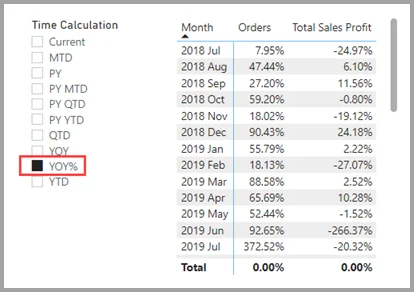
A prior-year comparison shifts the selected dates. A year-to-date calculation collects dates from the start of the year through the current date.
Sales PY =
CALCULATE([Total Sales], SAMEPERIODLASTYEAR('Date'[Date]))
A proper shared keeps these calculations consistent.
Separate shifting from accumulating
Use date-shifting functions when the comparison is another period, such as previous month or previous year. Use accumulation functions when the question asks for a running period total such as year to date.
Both patterns depend on reliable date context. A shared date table keeps period boundaries and consistent across .
Exam clue: “same period earlier” means shift; “since start of year” means accumulation.
Key points
- : shifts the current date selection
- : shifts exactly one year back
- : returns dates from year start
- : evaluates a year to date
Click an underlined term for a one-line explanation, or see them all in the glossary .
Exam trap
shifts dates; it does not accumulate values from the start of the year.
Sources · 3 Microsoft Learn pages Show ▾
Checked on October 4, 2026. Report a problem
Go deeper on Microsoft Learn
Checked against Microsoft Learn on October 4, 2026. Report a problem with this card