PL-300 · 2.1.3 · Model the data
Cardinality and cross filter
Define a relationship's cardinality and cross-filter direction
defines uniqueness; defines how filters propagate between related tables.
Cardinality is about uniqueness
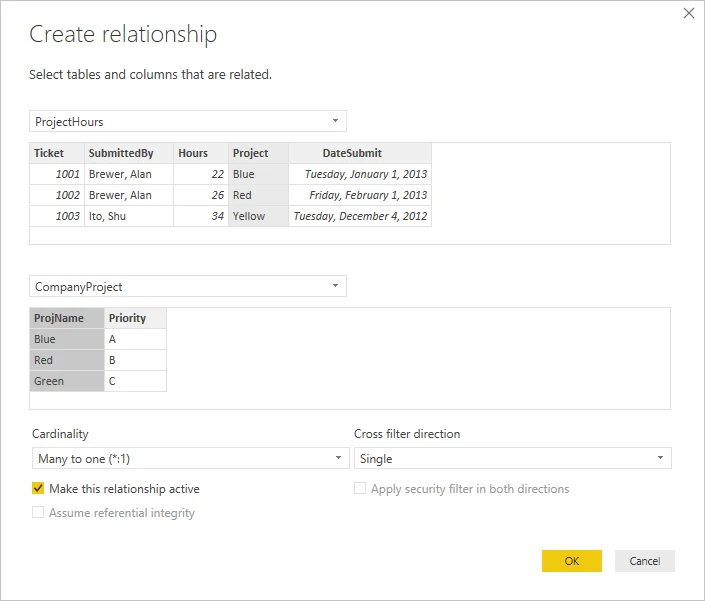
describes whether the columns contain unique or repeated values. In a , the dimension key is normally unique and the repeats that key.
Recognize the patterns
| Pattern | Typical meaning |
|---|---|
| One-to-many | Dimension filters a |
| One-to-one | Both sides contain unique values |
| Many-to-many | Both sides can repeat values |
Many-to-many is valid, but it needs more care because filter behavior can be less obvious.
Cross-filter direction

Single direction from dimension to fact is the safest default. Use Both only when the model genuinely needs filters to travel both ways, because extra filter paths can create ambiguity.
Exam clue: determine uniqueness first, then decide how filters must propagate.
Key points
- One-to-many: standard star-schema
- : depends on unique and duplicate values
- : controls filter propagation direction
- Both direction: can create ambiguity and slower models
Click an underlined term for a one-line explanation, or see them all in the glossary .
Exam trap
Changing changes valid filter directions; it is not merely a label change.
Sources · 1 Microsoft Learn page Show ▾
Checked on October 4, 2026. Report a problem
Go deeper on Microsoft Learn
Checked against Microsoft Learn on October 4, 2026. Report a problem with this card