PL-300 · 2.1.2 · Model the data
Role-playing dimensions
Implement role-playing dimensions
A represents multiple business roles, such as order date and ship date.
One dimension, more than one role
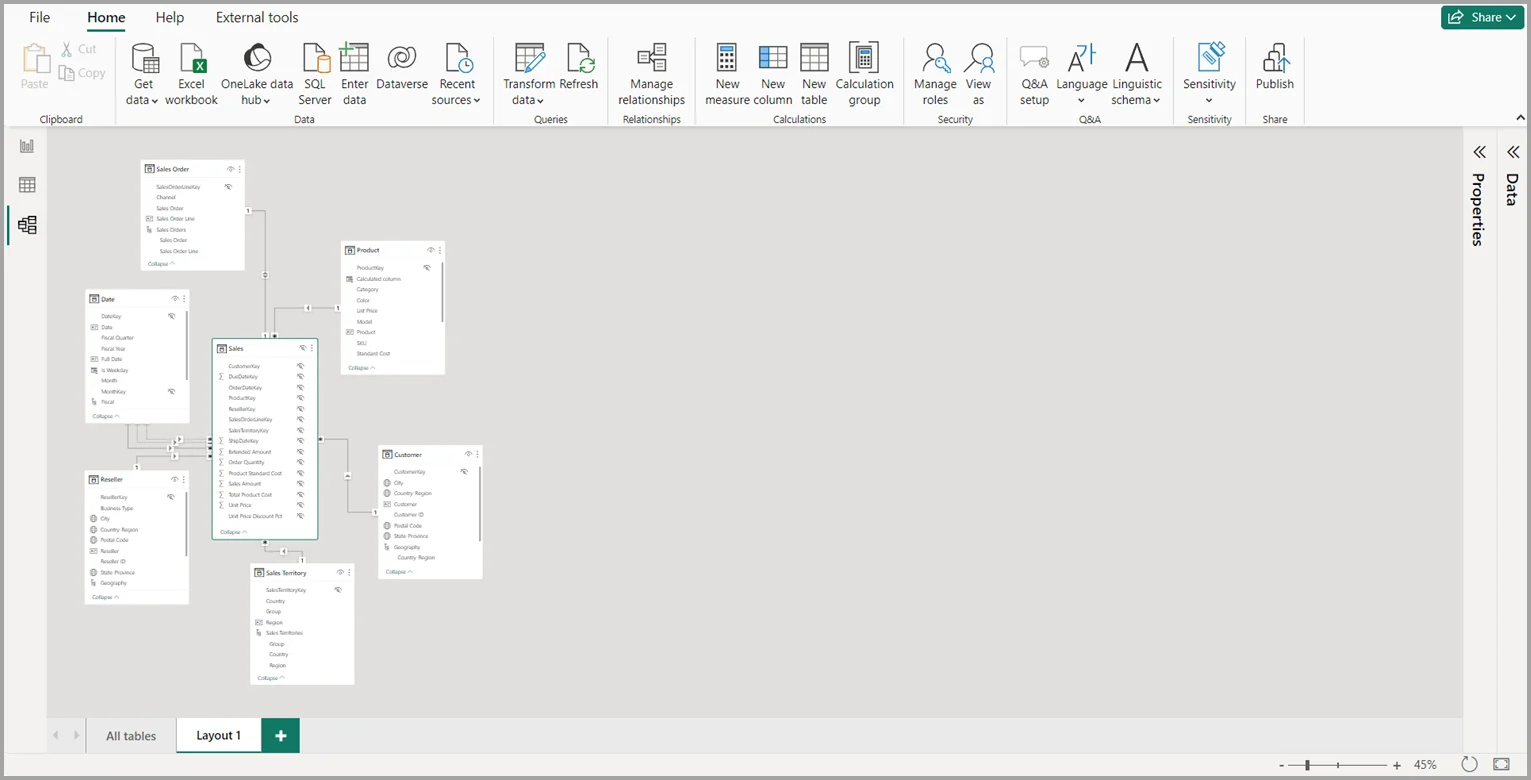
A can contain several foreign keys that conceptually point to the same dimension, such as OrderDate and ShipDate or AssignedTo and ReviewedBy. These are different business roles for the same type of entity.
Only one between the same two tables can be active at a time.
Choose between inactive and duplicated roles
Keep one shared dimension with an when a only occasionally needs the alternate role, such as Ship Date instead of Order Date. Duplicate the dimension when both roles must filter visuals independently and at the same time.
That choice is about report behavior, not about whether the underlying date values are different.
Exam clue: two fact keys pointing to the same dimension are the classic role-playing-dimension pattern.
Key points
- Shared dimension: multiple to one fact
- Only one relationship: active between the same tables
- : activates an inactive path in a
- Duplicate dimension: enables simultaneous active roles
Click an underlined term for a one-line explanation, or see them all in the glossary .
Exam trap
does not propagate through , even when a uses .
Sources · 2 Microsoft Learn pages Show ▾
Checked on October 4, 2026. Report a problem
Go deeper on Microsoft Learn
Checked against Microsoft Learn on October 4, 2026. Report a problem with this card